One of the last unaltered Arts and Crafts houses in Wisconsin
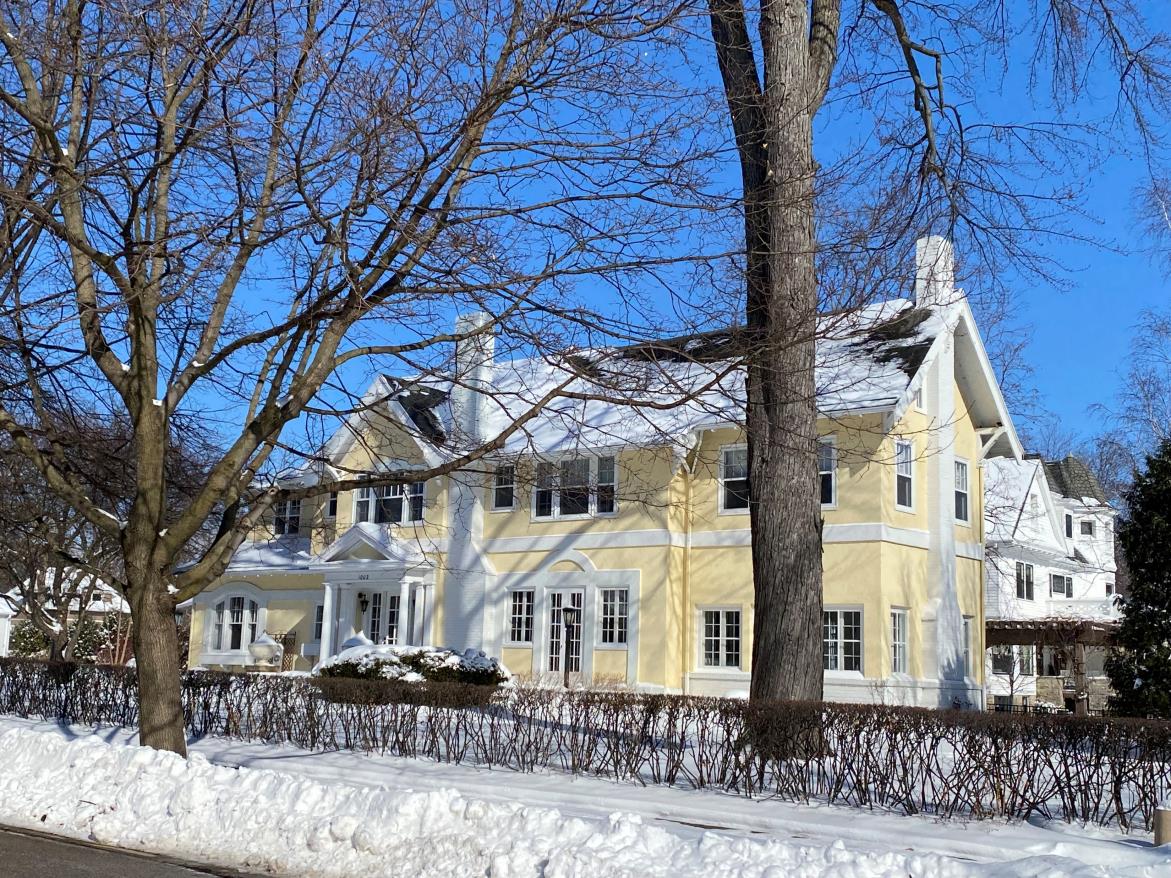
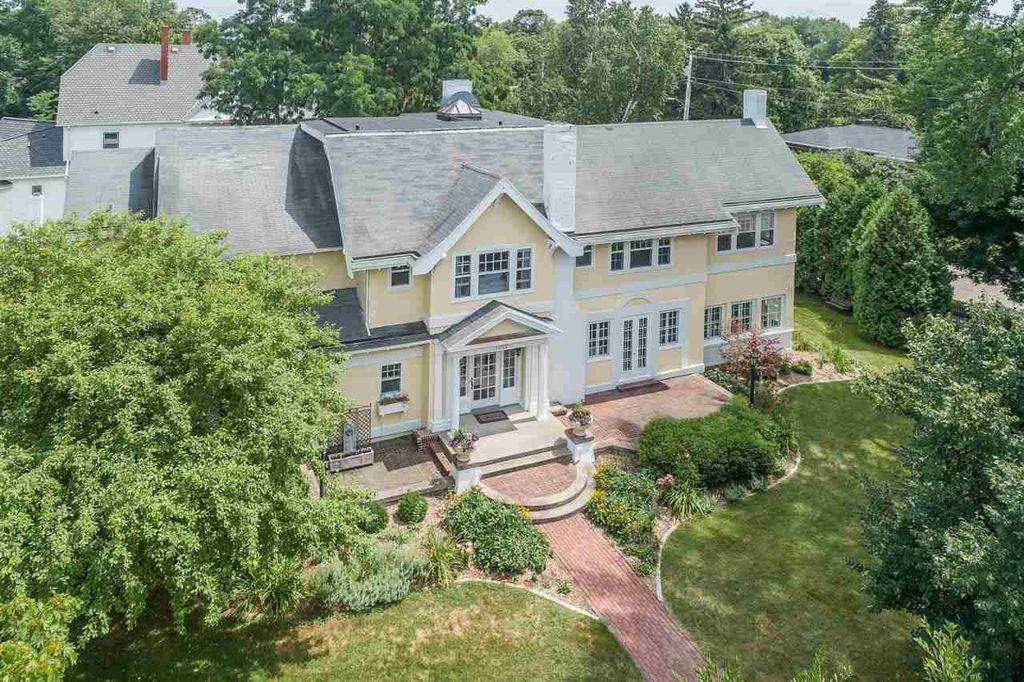
The Isabel and Orrin Bacon-Johnson House is a remarkable example of an unaltered Arts and Crafts house built in Neenah in 1918. The number of Arts and Crafts houses built in Wisconsin is relatively small, and with only five such houses listed in the Architecture and History Inventory for Neenah, the Bacon-Johnson House is one of the last Arts and Crafts survivors of the city.
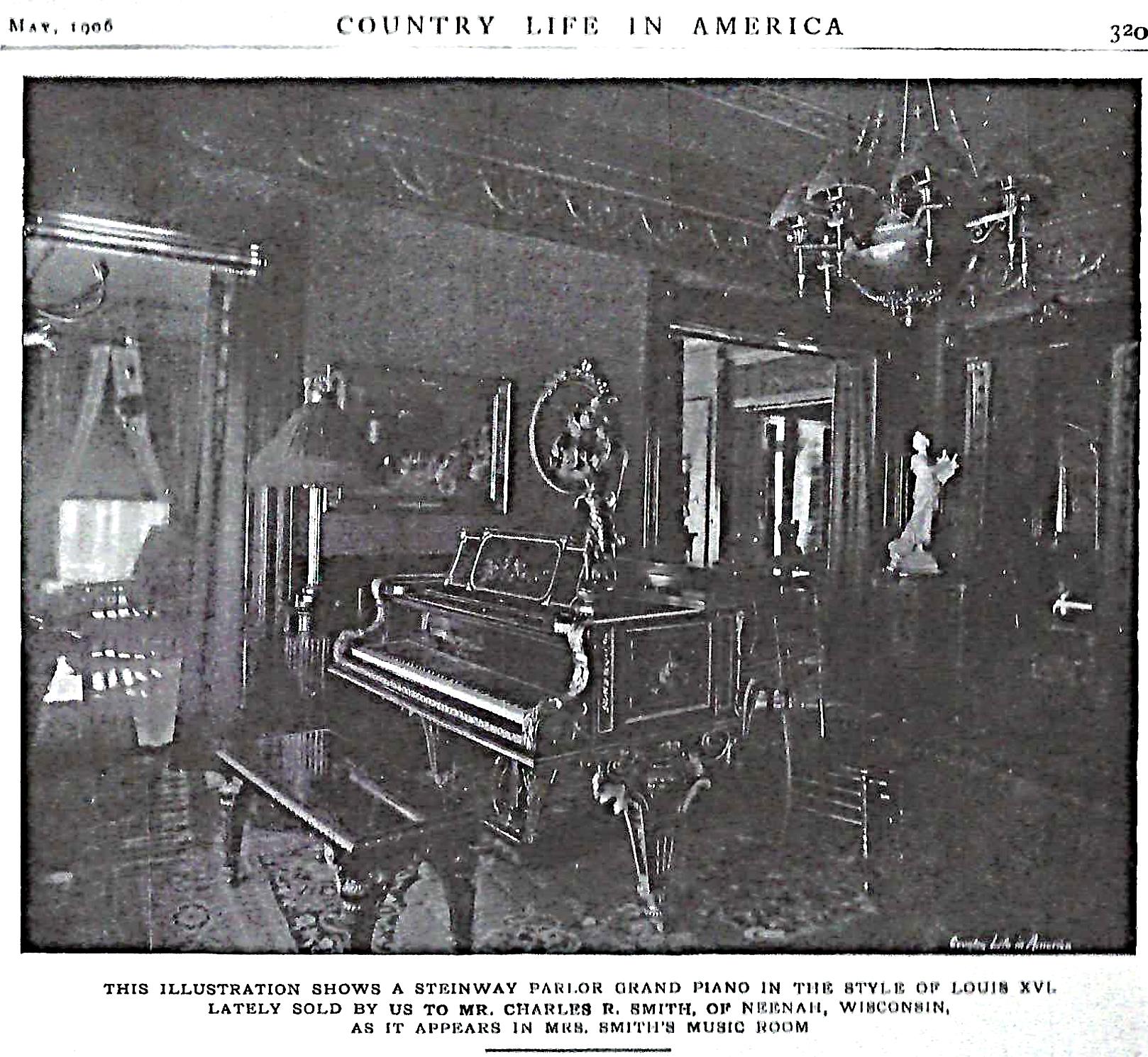
The house was built for a fascinating woman—Isabel Bacon Johnson—who had three great passions in her life: theater and entertainment, French fine arts, and automobiles. She designed her home to accommodate all of these passions, from the elegant piano room that once held a Louis XIV Steinway Grand to the innovative attached three-car heated garage with direct access to her private sitting room.
Once known as the "Show Place in the Valley," this unaltered Arts and Crafts treasure represents a unique chapter in Neenah's architectural heritage. In 2024, its significance was officially recognized with individual listing on the National Register of Historic Places.
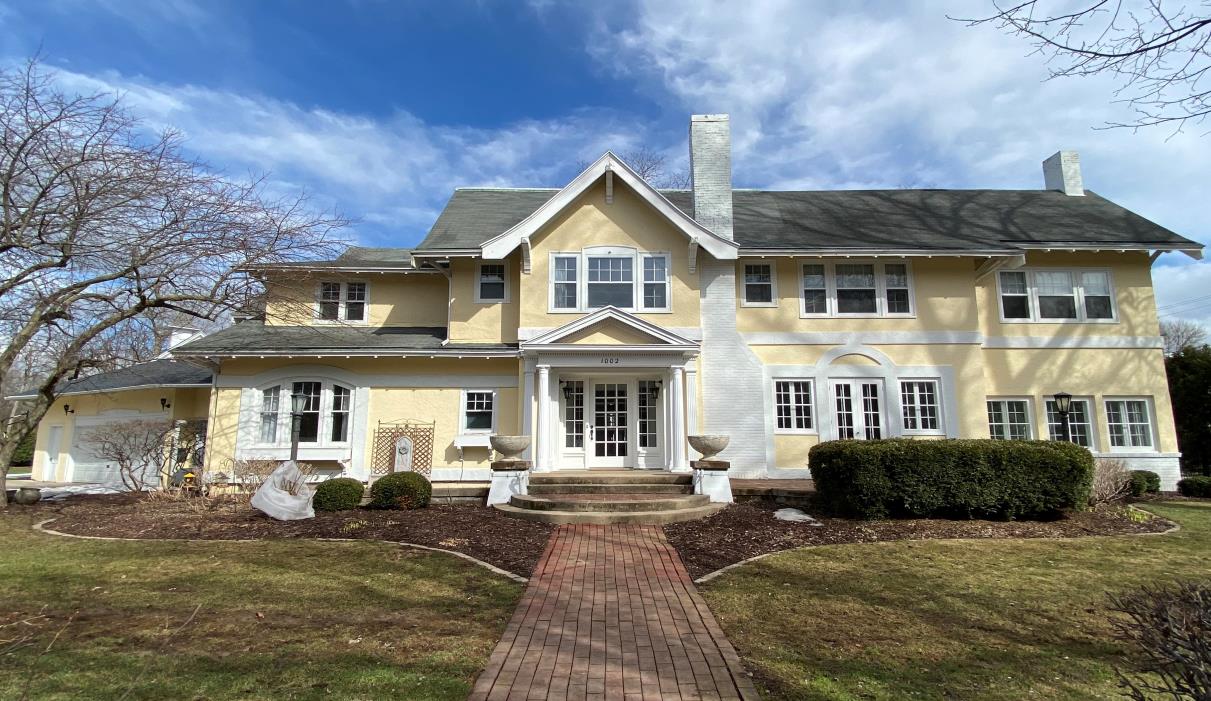
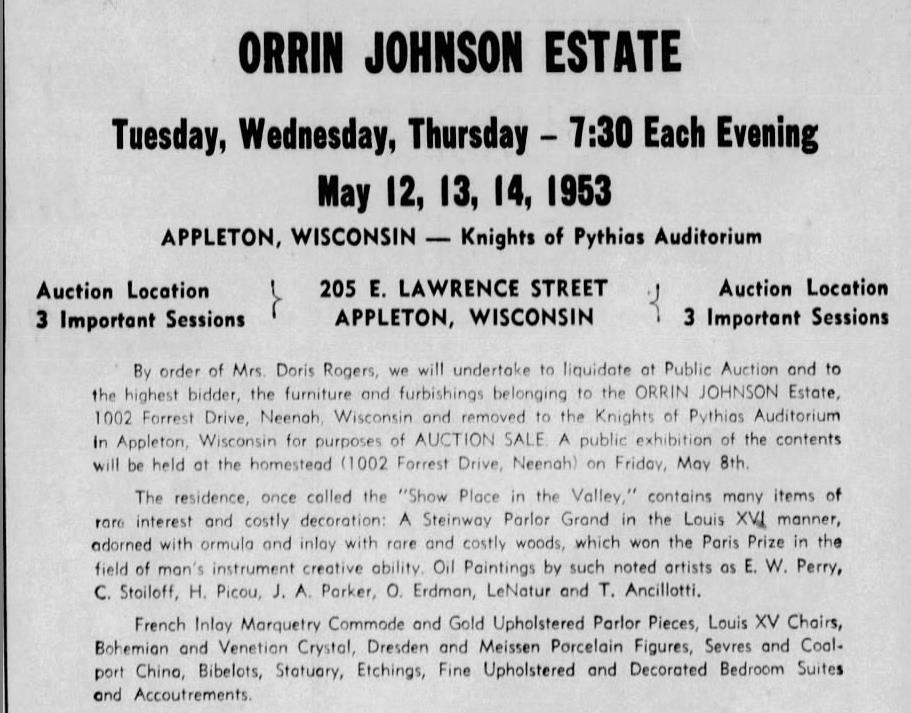
"The residence, once called the 'Show Place in the Valley,' contains many items of rare interest and costly decoration."
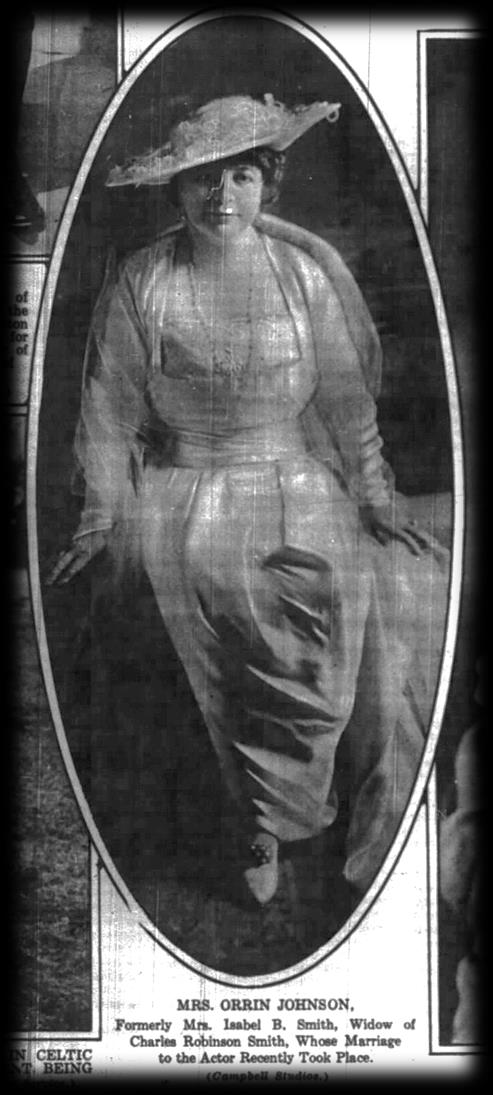
A woman of three passions and three husbands
The remarkable life of Isabel Bacon Johnson (1870–1950)
Isabel Bacon Johnson was an interesting woman with three great passions in her life: theater and entertainment, French fine arts, and automobiles. She designed her house to accommodate all of these interests—and she had the means to do so, as she also had three husbands in her life, each bringing her greater social standing and wealth.
Born into the prominent Bacon family of Wisconsin, Isabel lived a life worthy of the stage. Her love of theater led her to spend much time in New York City, where she became a prominent socialite with strong interests in the performing arts. This passion ultimately led her to her third husband—the celebrated Broadway actor Orrin Johnson.
As a woman ahead of her time, Isabel was an avid driver who insisted on having her sitting room directly connected to the garage—an unusual arrangement that placed her close to both her staff and her beloved automobiles. The typical practice of the era was for garages to connect to servants' areas, not to the living quarters of the home's owner.
Isabel married her first husband, Henry Rogers, a banker. Seven years later, he petitioned for and was granted a divorce.
She remarried one of the wealthiest men in Wisconsin, Charles R. Smith, President of Menasha Woodenware Company. After his death in 1916, she inherited a third of his fortune—$1 million (equivalent to $28 million today).
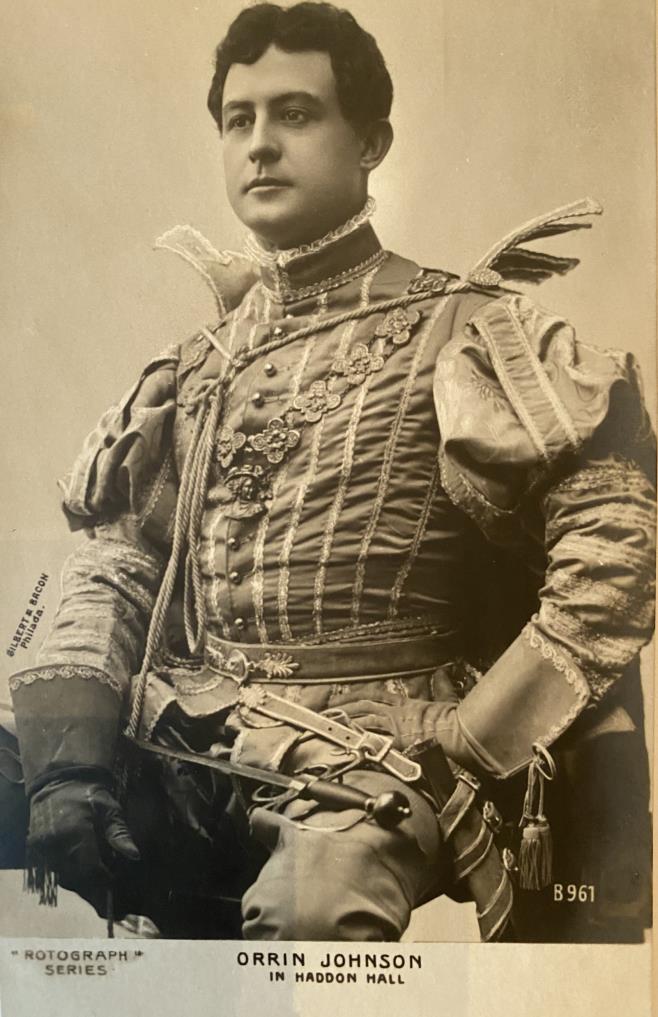
She married the celebrated Broadway actor Orrin Johnson, who had played numerous leading roles on stage and in early silent films, including a remarkable D'Artagnan in the first production of The Three Musketeers.
Orrin Johnson was a celebrated Broadway actor known for his romantic leading roles. A protégé of the legendary producer David Belasco, he performed alongside Maude Adams and was an early silent film star. His portrayal of D'Artagnan in The Three Musketeers was particularly acclaimed.
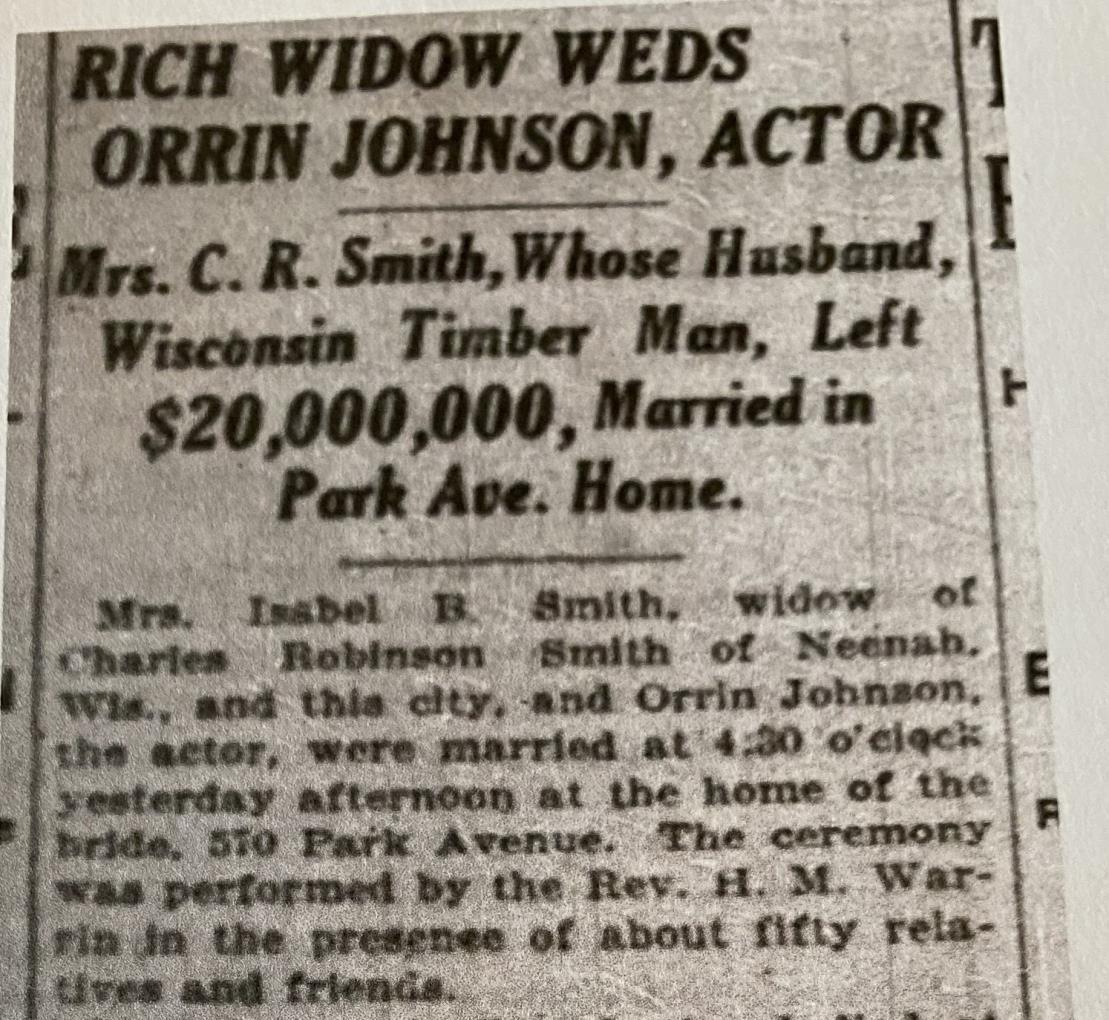
The wedding of the wealthy widow and the matinee idol made headlines in The New York Times on June 27, 1918, under the banner "Rich Widow Weds Orrin Johnson, Actor."
Although a prominent New York actor, Orrin eventually "aged out" of leading man roles and failed to make a successful transition to Hollywood silent films. He spent most of his later years in Neenah as a retired actor, enjoying the beautiful home Isabel had created for them. He died in 1943, and Isabel continued to live in the house until her death in 1950.
Pioneer heritage and Revolutionary War lineage
Isabel Bacon Johnson descended from early American settlers who helped shape Wisconsin's history. Her family tree includes Revolutionary War patriots, California Gold Rush adventurers, Civil War veterans, and pioneer settlers who established some of Wisconsin's earliest communities.
1747–1824 • Brimfield, Massachusetts
Revolutionary War Patriot
Served in the American Revolution. Listed in the DAR Lineage Book (Vol. 46, 1903) and "Abstract of Graves of Revolutionary Patriots." Married Mary Whitecomb (1751–1828).
1798–1873 • Granby, Connecticut → Wisconsin
Wisconsin Pioneer
Born in Connecticut, arrived in Wisconsin Territory by 1840—among the earliest settlers. Established the family in Kenosha before Wisconsin achieved statehood (1848). Married Mary Bullen (1807–1841).
1831–? • Hannibal, New York
Civil War Veteran & Gold Rush Prospector
Journeyed to California during the 1852 Gold Rush. Later served in the Civil War and was a member of the Grand Army of the Republic (GAR). Married Elizabeth M. Clausen (1848–?).
December 1870–August 30, 1950
Born in Saugatuck, Allegan County, Michigan. Raised in Mt. Pleasant, Racine County, Wisconsin. Married three times; built the Bacon-Johnson House in 1917 with her third husband, actor Orrin Johnson.
Married 1889 • Divorced by 1900
Born March 18, 1860 in Lake Geneva, Wisconsin. Isabel opened a dancing school while married to Rogers. After their divorce, he remarried and lived in Racine until his death on August 27, 1939.
Married 1900 • Died 1916
Born January 14, 1855 in Menasha, Wisconsin. President of Menasha Wooden Ware Company. Wealthy industrialist who left Isabel approximately $1 million (equivalent to $28 million today). Died May 12, 1916 in New York City.
Married 1918 • Died 1943
Born December 1, 1866 in Louisville, Kentucky. Famous Broadway and film actor who played D'Artagnan in "The Three Musketeers." Built the Bacon-Johnson House with Isabel. His obituary appeared in The New York Times. Died November 24, 1943.
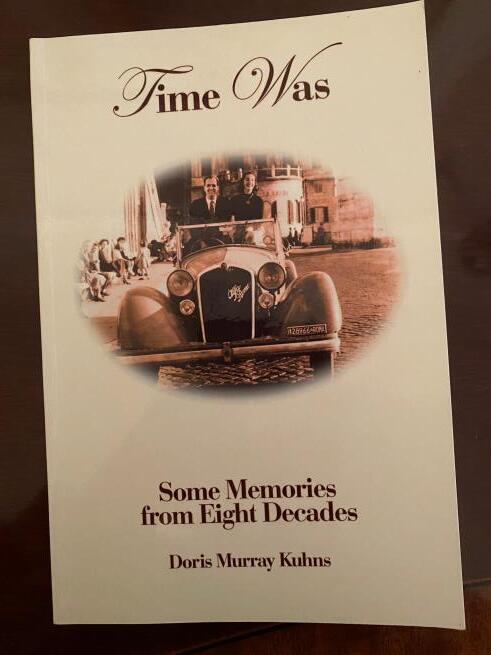
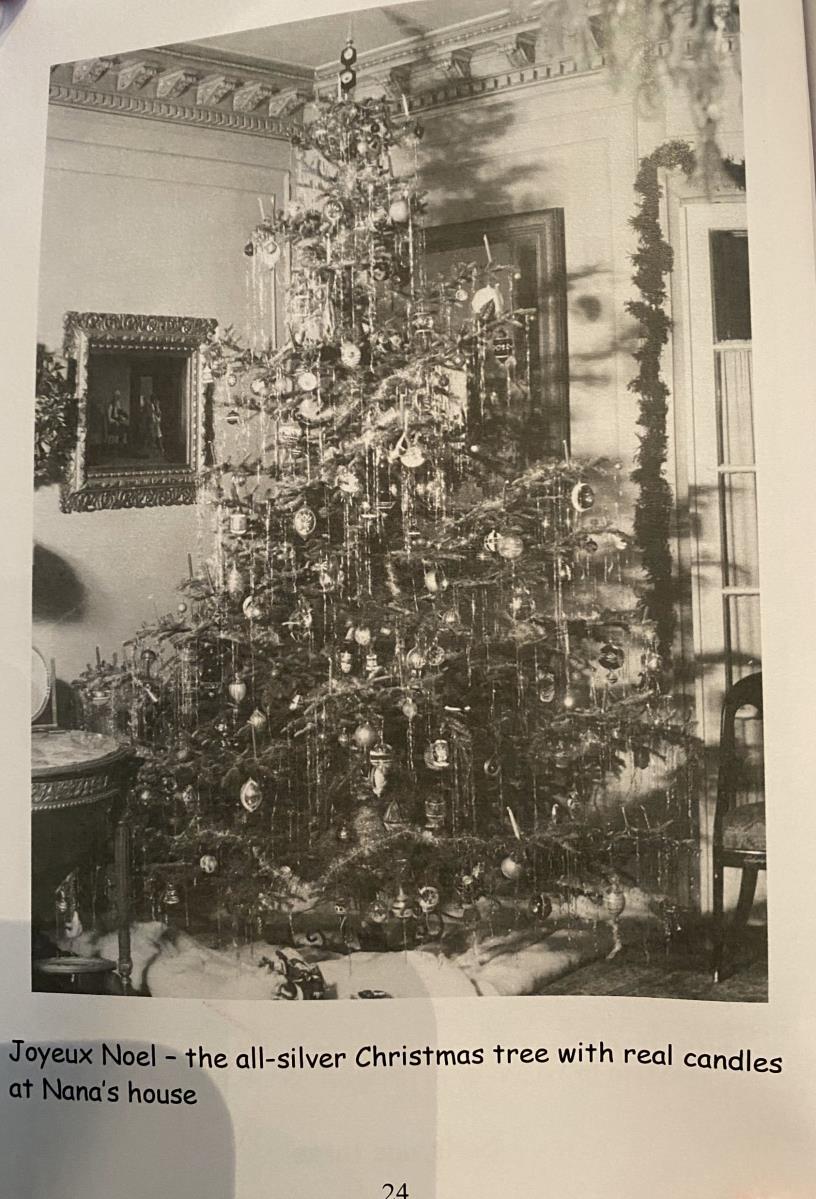
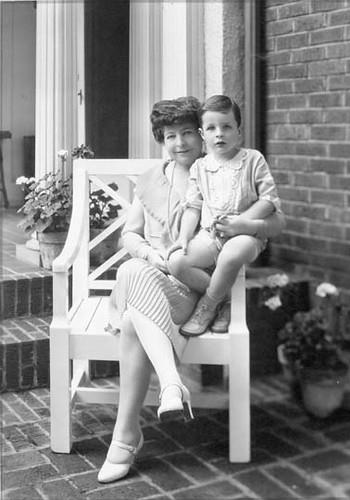
Isabel had one child, Doris Isabel Rogers (later Doris Isabel Murray), from her first marriage. Doris's granddaughter, Doris Murray Kuhns (1929–2018), authored the memoir "Time Was: Some Memories from Eight Decades" which contains invaluable family photographs and stories, including a 1937 Christmas photo showing the piano room exactly as it appears today.
"Time Was: Some Memories from Eight Decades" by Doris Murray Kuhns
From Victorian cottage to Arts and Crafts masterpiece
The evolution of 1002 East Forest Avenue
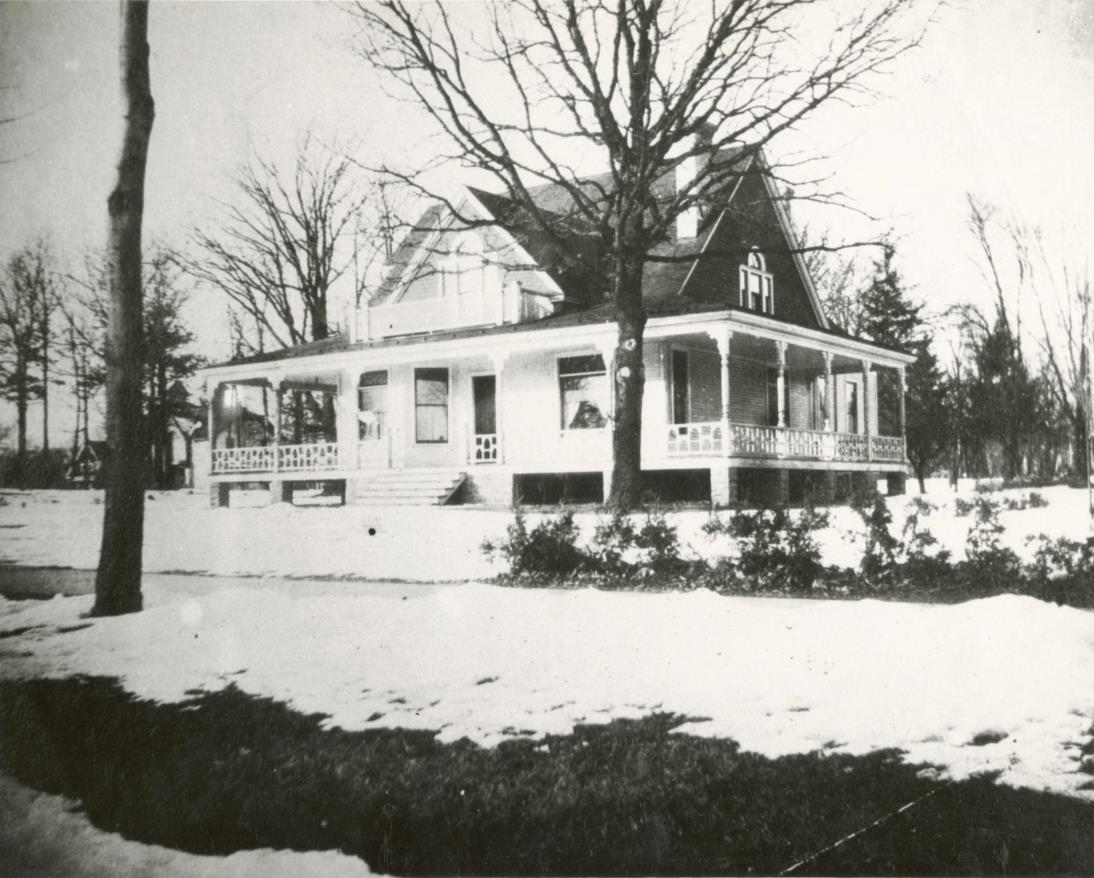
Three months after her wedding to Charles R. Smith, Isabel purchased land on East Forest Avenue on Doty Island, at the corner of 9th Street.
Isabel had a house built for her mother, Elizabeth Bacon. It was a two-story late Queen Anne style house with a steeply-pitched intersecting gable roof, a first-story bay window, and a wide wrap-around porch with turned posts and an open patterned balustrade.
Charles R. Smith passed away, leaving Isabel a third of his fortune—approximately $1 million ($28 million in today's dollars). She continued her socialite lifestyle, spending much time in New York City.
Isabel married Broadway actor Orrin Johnson at her Park Avenue home in New York City. The wedding made headlines in The New York Times. She immediately began planning the reconstruction of her mother's house to accommodate her new life with Orrin.
The house was completely rebuilt in the Arts and Crafts style with Georgian Revival elements. Nothing from the original 1901 appearance remains on the exterior. The new design featured expansive stucco surfaces, extensive fenestration with leaded glass, an innovative open floor plan, and the groundbreaking attached three-car heated garage.
The City of Neenah conducted a detailed appraisal, documenting the home's exceptional features including four fireplaces, beamed ceilings, the heated garage with beadboard ceiling, and detailed room-by-room descriptions. The footprint recorded in 1934 is identical to the current one.
Orrin Johnson passed away at the Neenah home. His obituary appeared in The New York Times on November 25, 1943.
Isabel Bacon Johnson passed away, having lived in the house for over three decades. The estate would soon be liquidated.
The estate was liquidated at public auction at the Knights of Pythias Auditorium in Appleton. The residence was advertised as the "Show Place in the Valley," containing items of rare interest including the Louis XIV Steinway Parlor Grand piano that Charles Smith had purchased and Isabel had brought to the Bacon-Johnson House.
The house was listed as a contributing property in the East Forest Avenue Historic District on the National Register of Historic Places.
On June 26, 2024, the Isabel and Orrin Bacon-Johnson House was individually listed on the National Register of Historic Places, recognizing its exceptional architectural and historical significance as the finest unaltered Arts and Crafts house in Neenah.
Arts and Crafts simplicity with period revival elegance
A rupture in style with the sophisticated Victorian period
The Arts and Crafts architecture was a rupture in style with the sophisticated Victorian period—a reaction against mass production. As a result, Arts and Crafts houses look simple, with very little decoration, but elegant with period revival references. The Bacon-Johnson House perfectly embodies this philosophy.
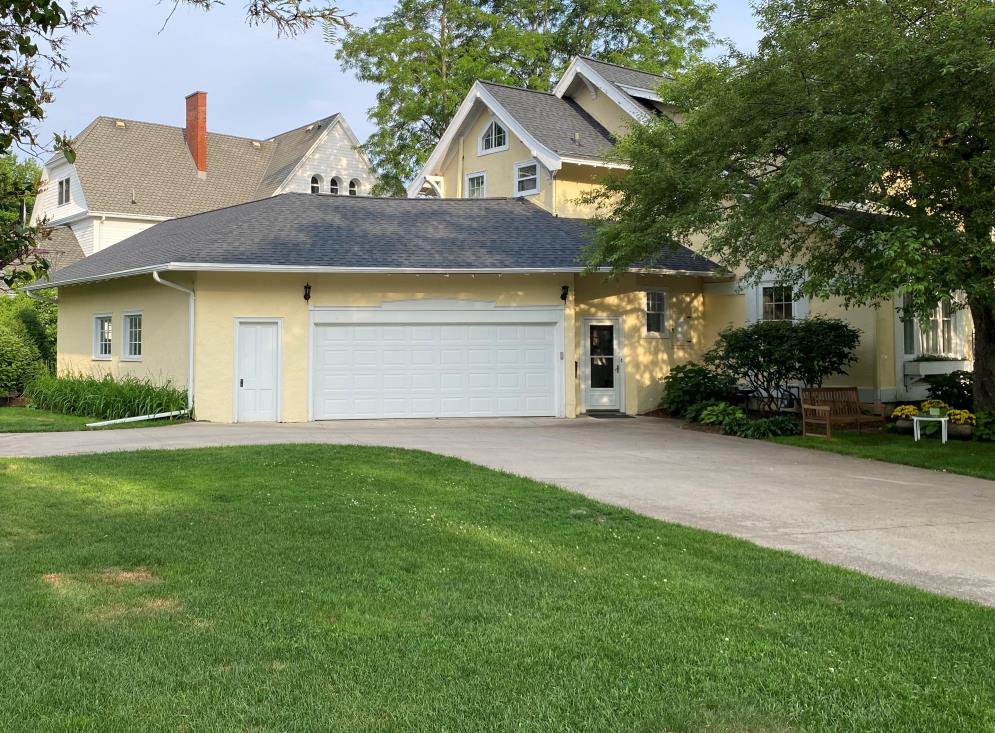
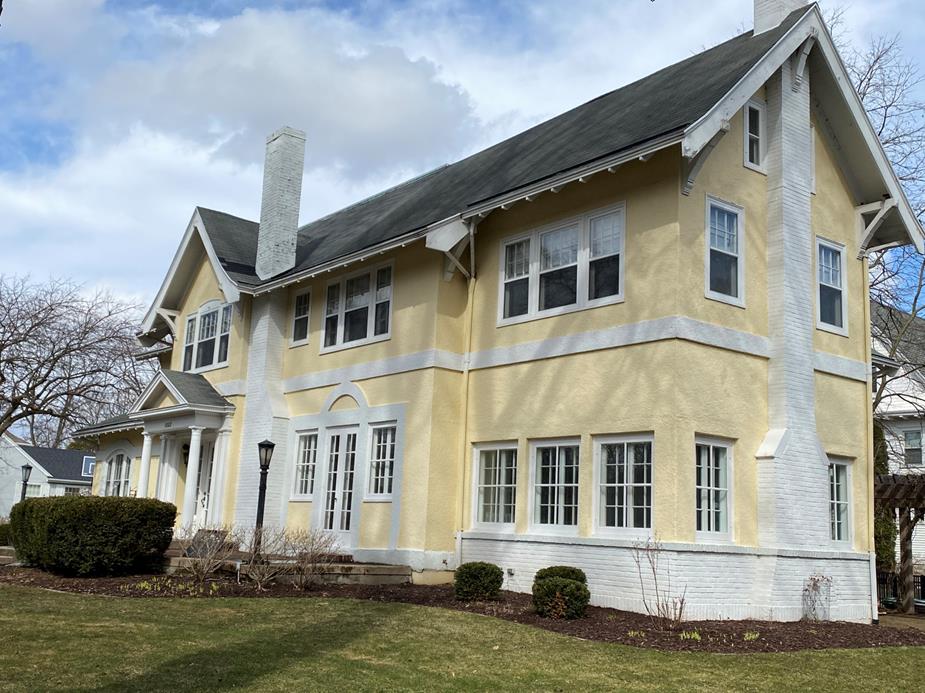
Features Arts and Crafts simplicity with expansive stucco on the façade and shingled multiple-gable roof. Little decoration aside from well-placed multi-pane windows and a prominent chimney.
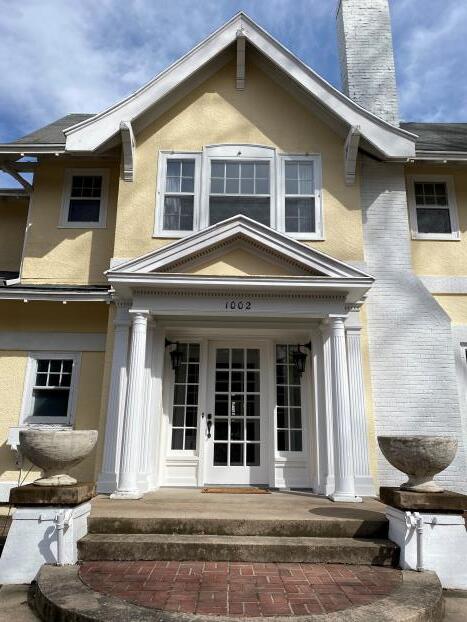
The house features Arts and Crafts elegance with its Georgian Revival entryway—a multi-light door flanked by sidelights and decorated with a full pediment supported by round columns.
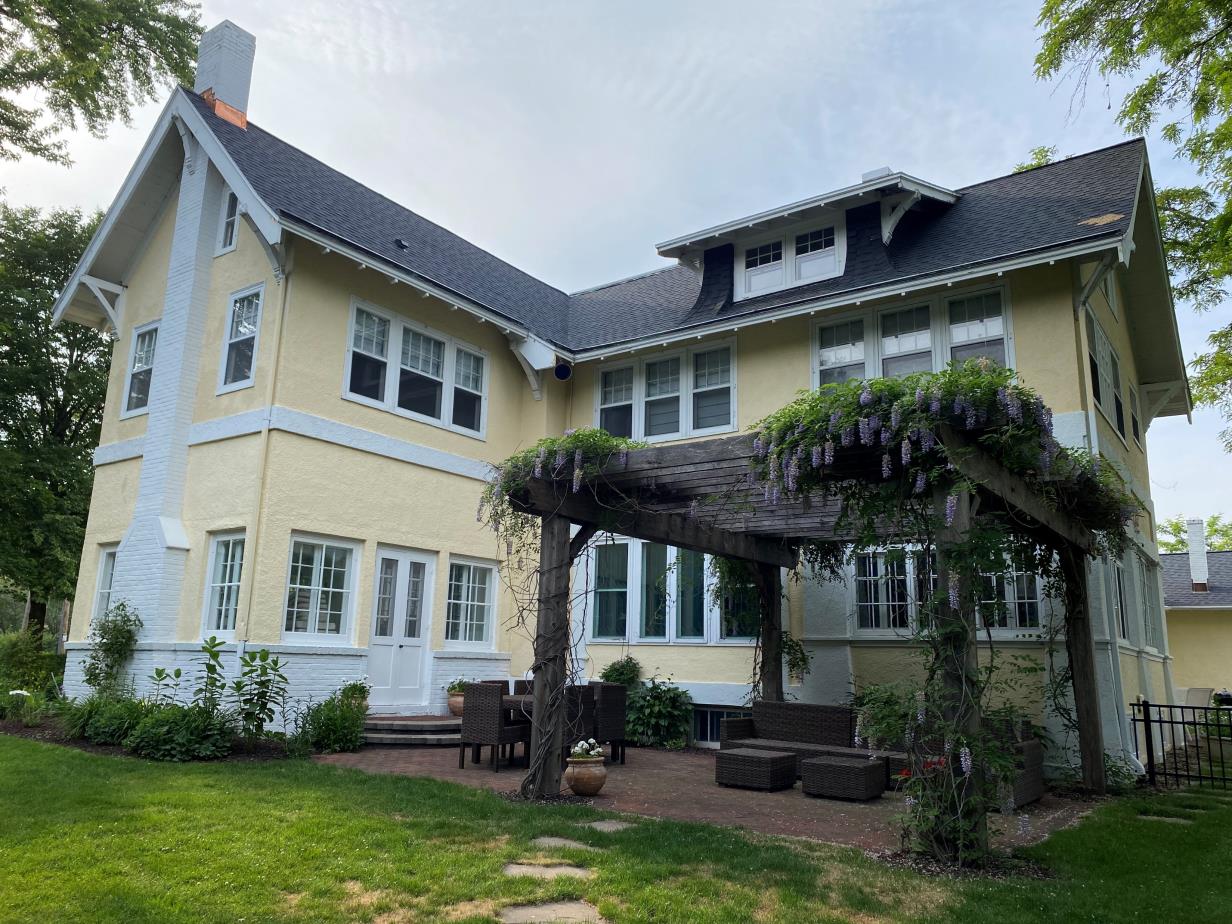
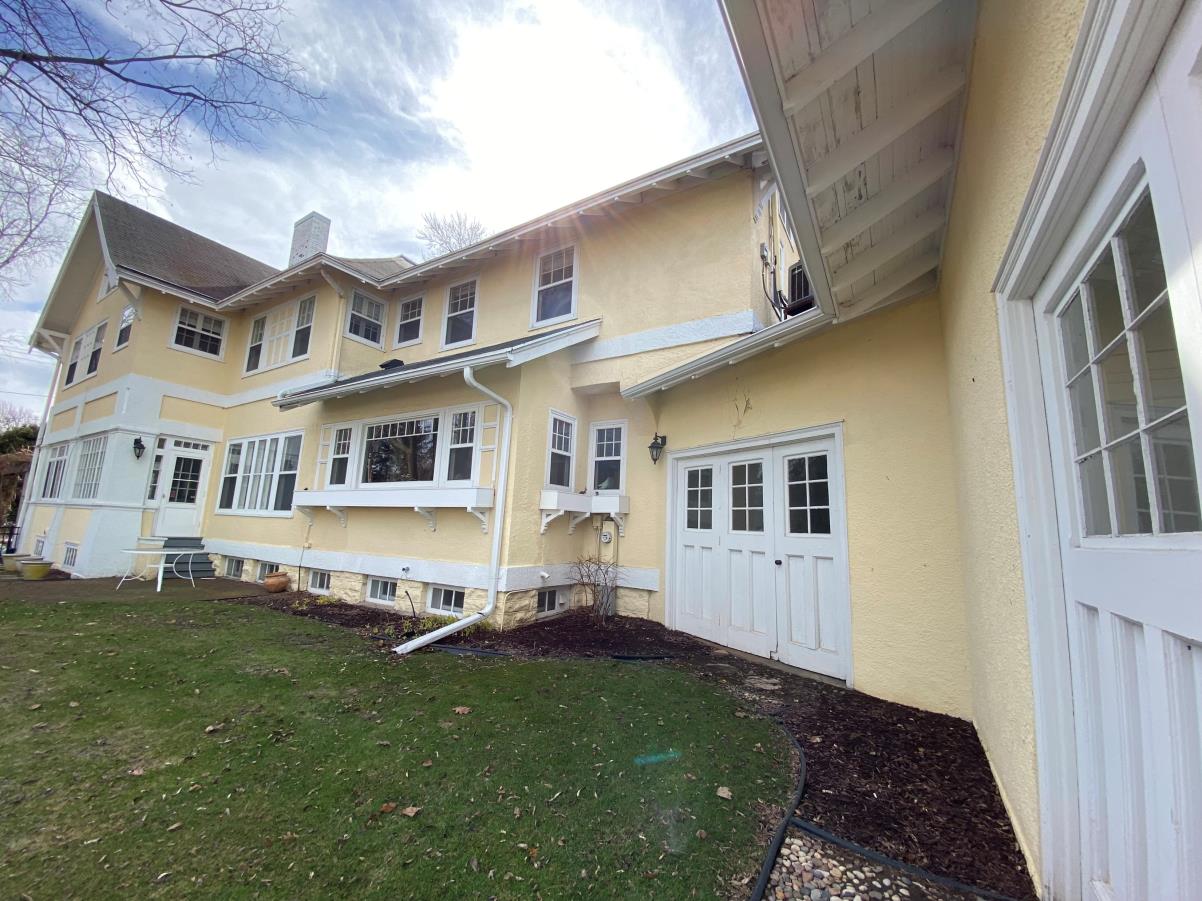
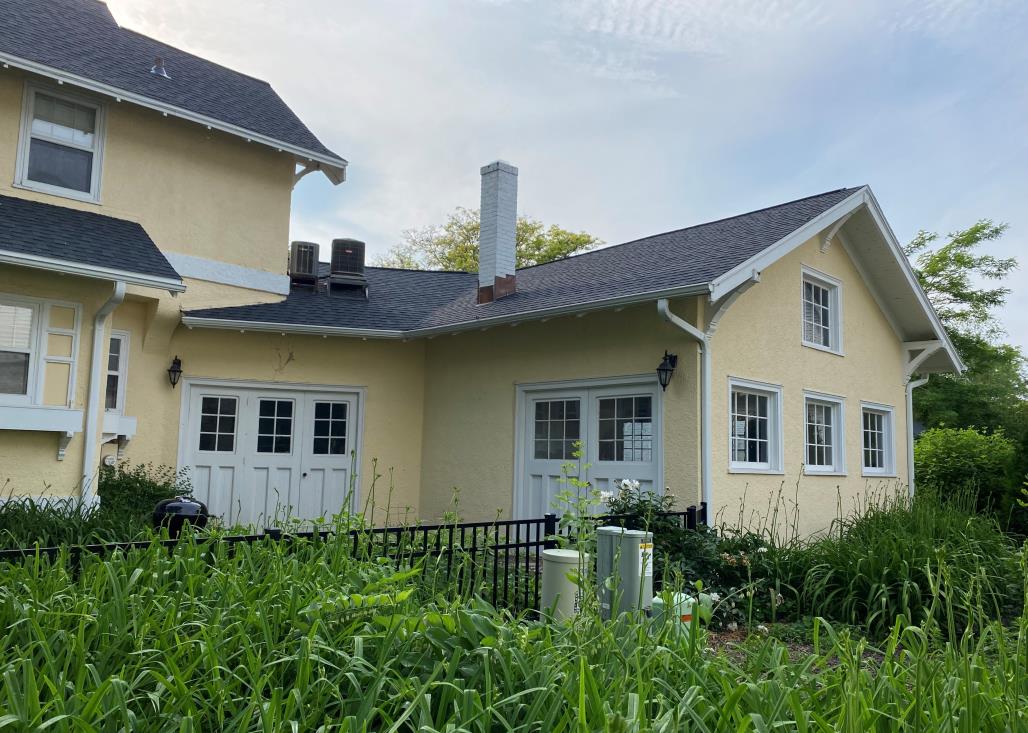
Like the west elevation, features expansive stucco, shingled roof, and a second prominent chimney. Expansive fenestration with French doors leading to the large south patio.
Multiple outside access points integrate interior and exterior spaces—a key Arts and Crafts concept of interaction with the outdoors.
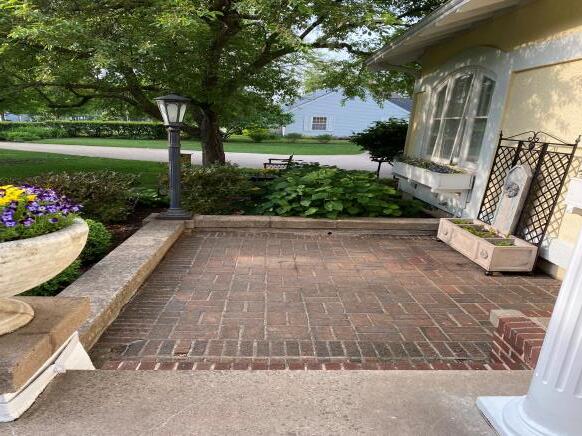
The house illustrates the Arts and Crafts concept of interaction with the outdoors through expansive fenestration and French doors leading to large terraces on the west and south sides.
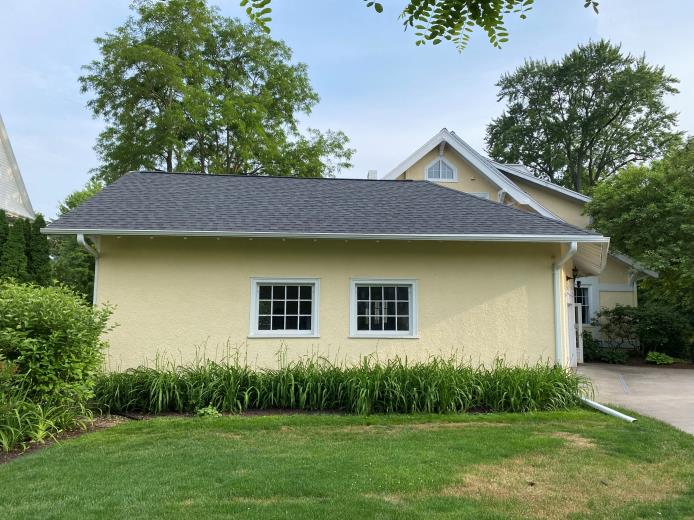
Remarkable for being the first three-car attached garage built in Neenah, originally built with the house. Features doors on both sides for access to both streets.
The house counts more than 100 windows and 5 exterior doors—testament to the Arts and Crafts emphasis on light and connection to the outdoors.
The garage itself is remarkable for several reasons:
First of its kind: It was the first three-car attached garage built in Neenah and was originally constructed with the house in 1919.
Dual access: It features doors on both sides, providing access to both East Forest Avenue and 9th Street.
Originally heated: The garage was heated from the beginning—a luxury for the era—with the small closet containing the heating furnace.
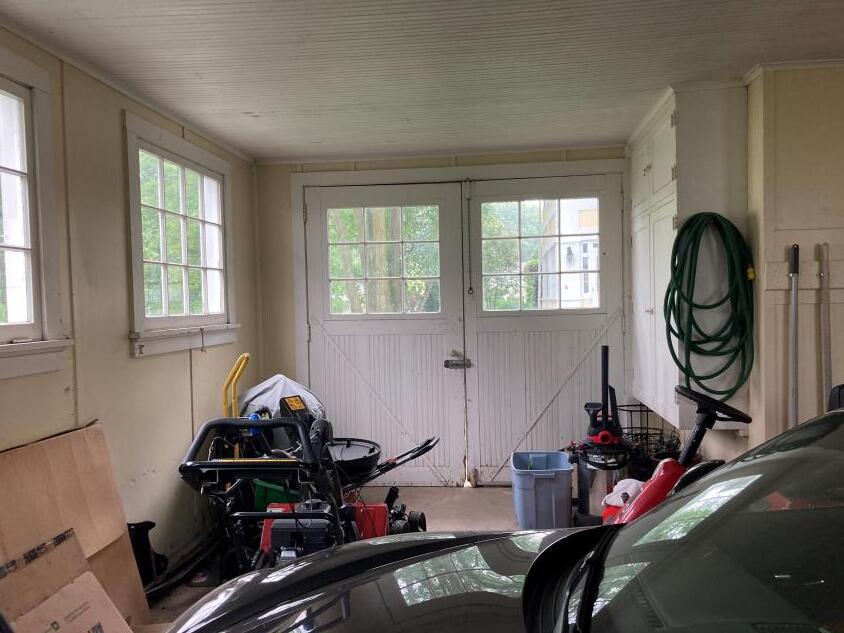
Exceptional integrity: The interior retains its original built-in cabinets, beadboard ceiling, and wooden workshop. Only the double-wide overhead door on one bay has been modified.
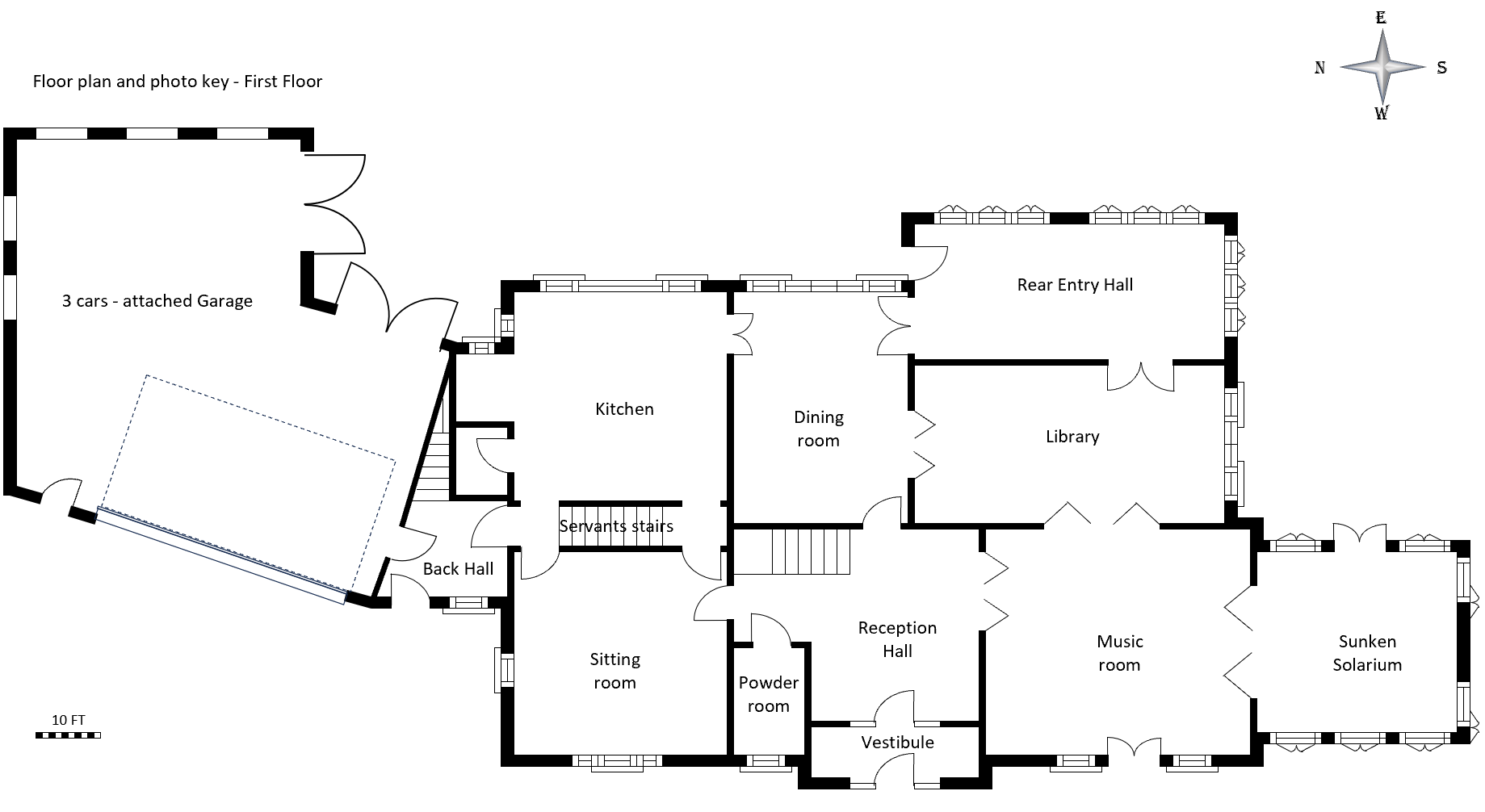
Direct connection to living quarters: Most unusually, the garage connects directly to Isabel's sitting room—reflecting her love of automobiles and desire to be close to her cars. The typical practice was for garages to connect to servants' areas, not the owner's living spaces.
Arts and Crafts open concept with Georgian Revival elegance
Innovative open floor plan with interconnected rooms
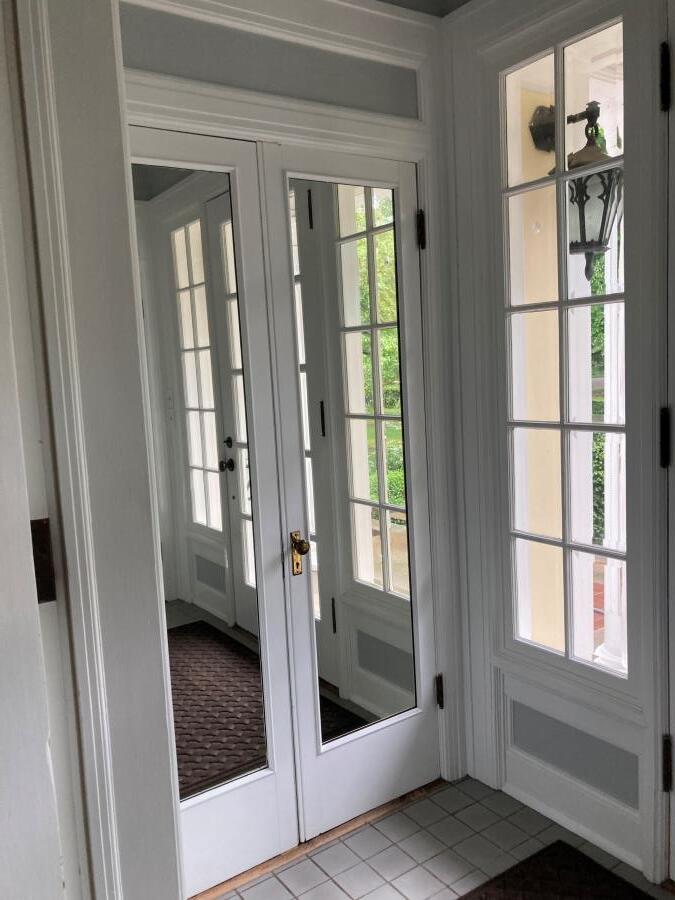
On the interior, the Bacon-Johnson House features the innovative Arts and Crafts concept of open space and interaction with the outdoors. On the first floor, all rooms except the sitting room are interconnected with seven multi-paned bi-fold French doors. Like the exterior, the interior features the combined Arts and Crafts simplicity and Georgian Revival elegance.
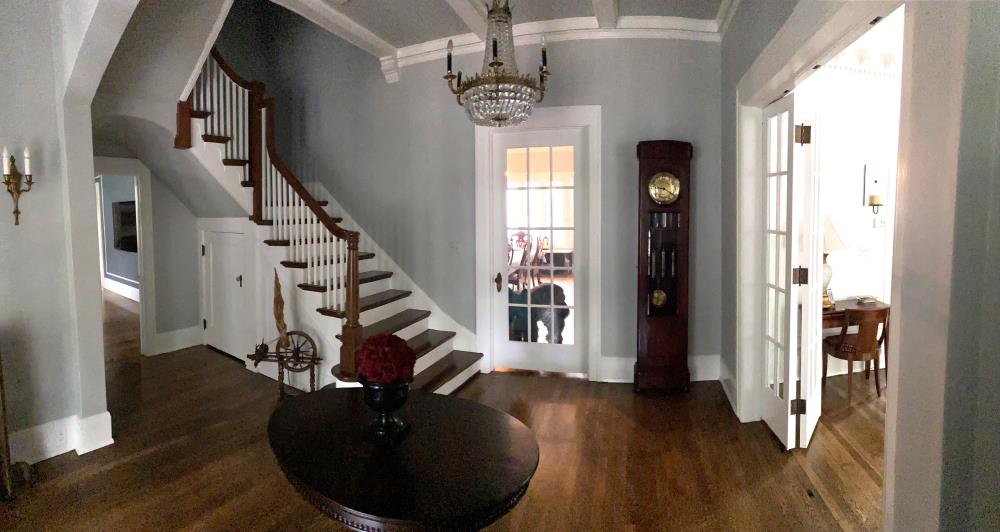
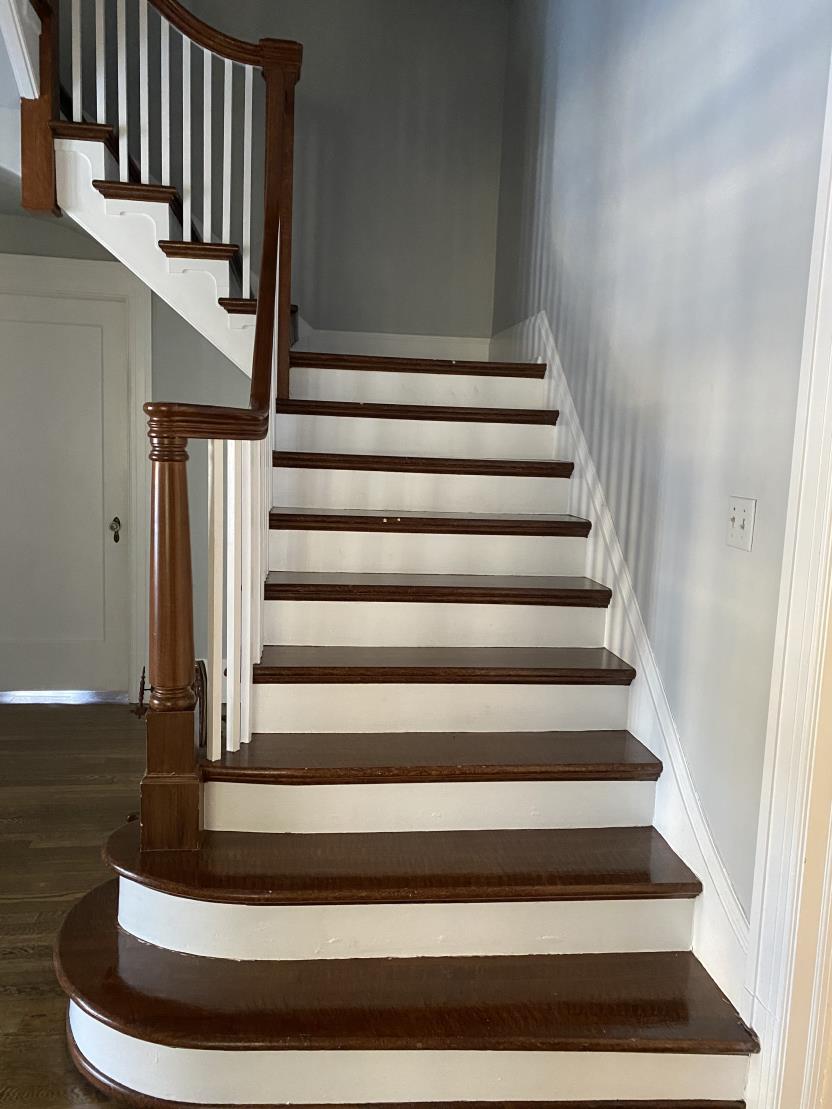
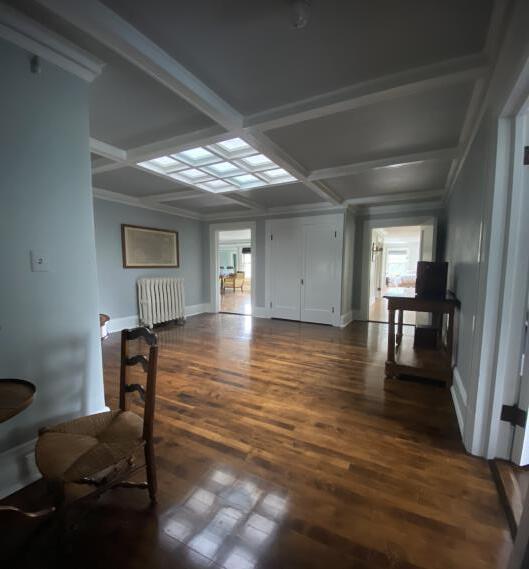
A simple Arts and Crafts box-beamed ceiling combines with an elegant classic Georgian Revival staircase. The open-floor concept is immediately apparent with interconnected rooms flowing from the hall to the piano room, solarium, library, and dining room.
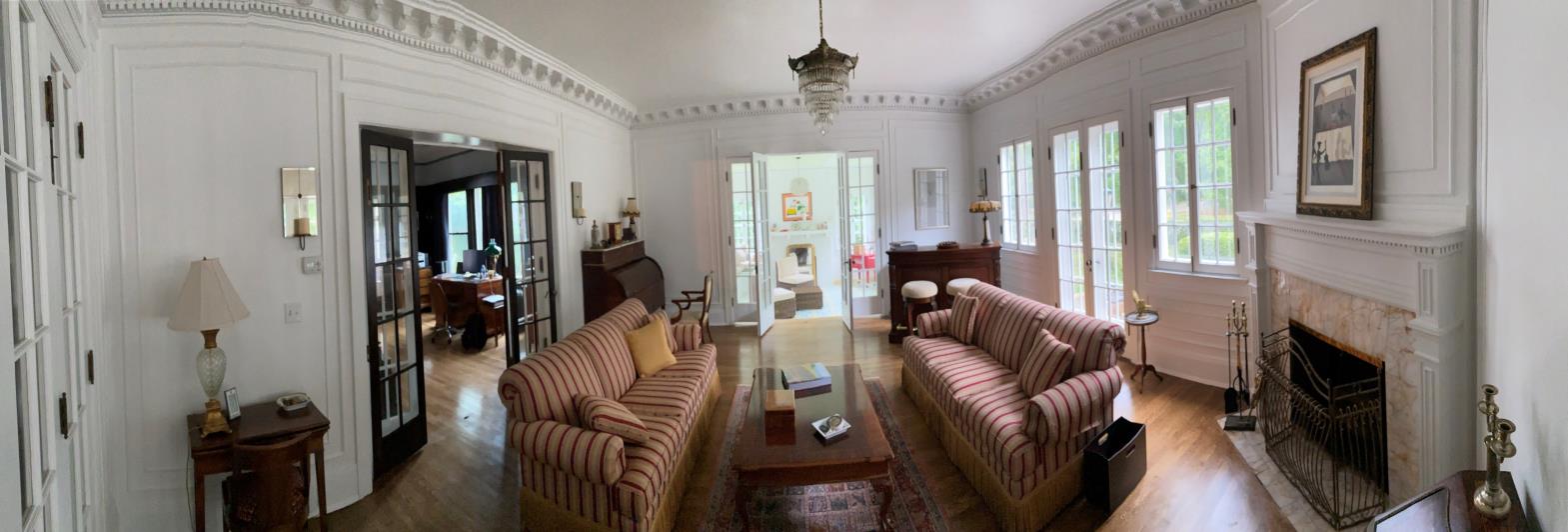
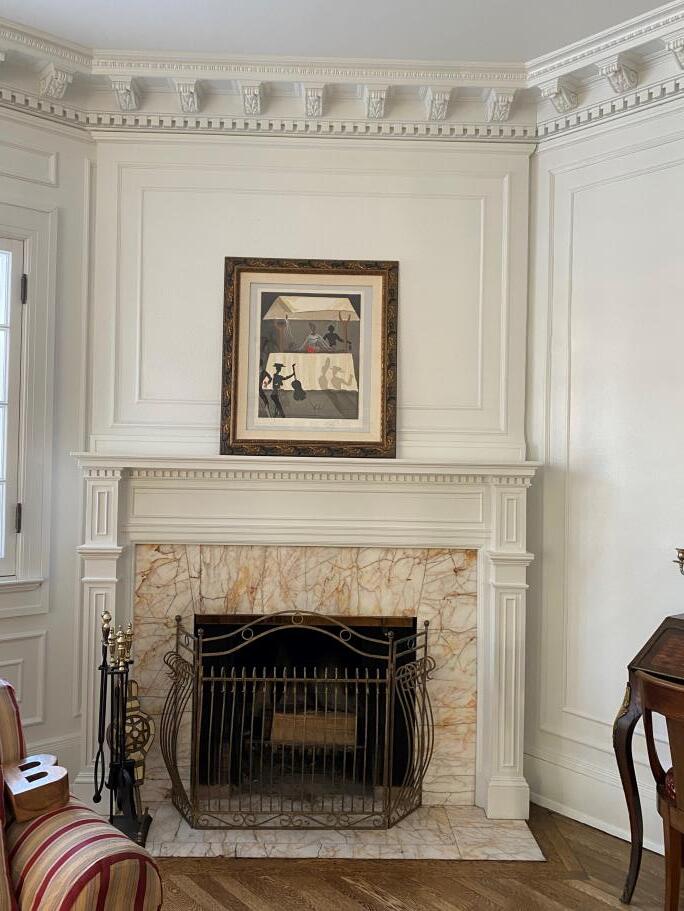
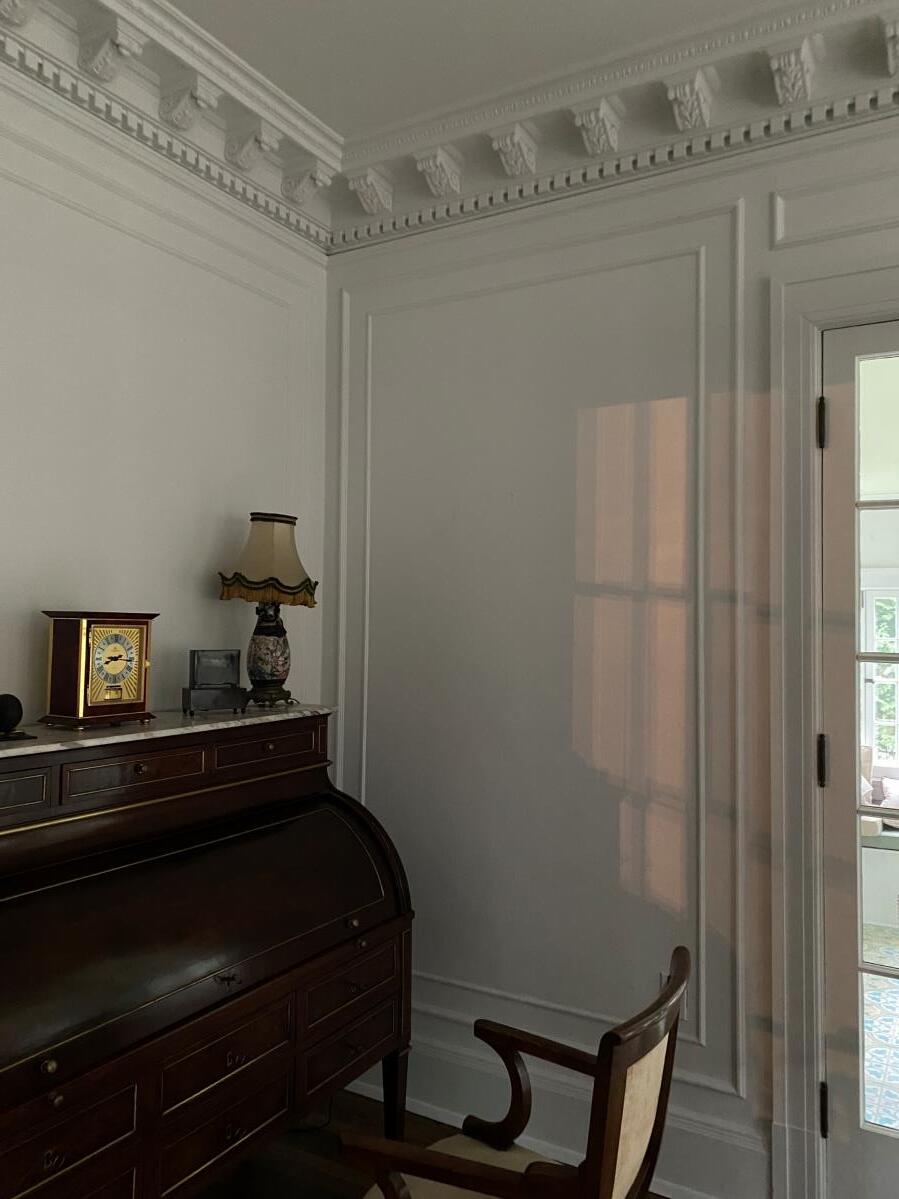
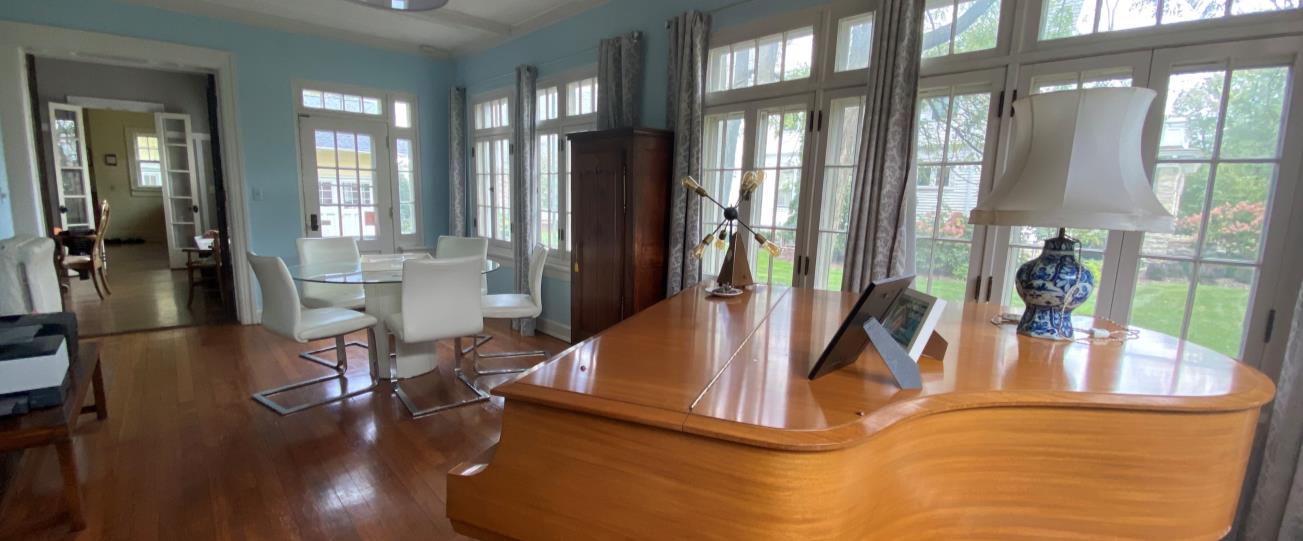
A sophisticated space with classic bracketed and dentiled cornice and a Georgian Revival fireplace with onyx surround. French doors lead to the front terrace. This room once housed Isabel's prized Louis XIV Steinway Grand Piano.
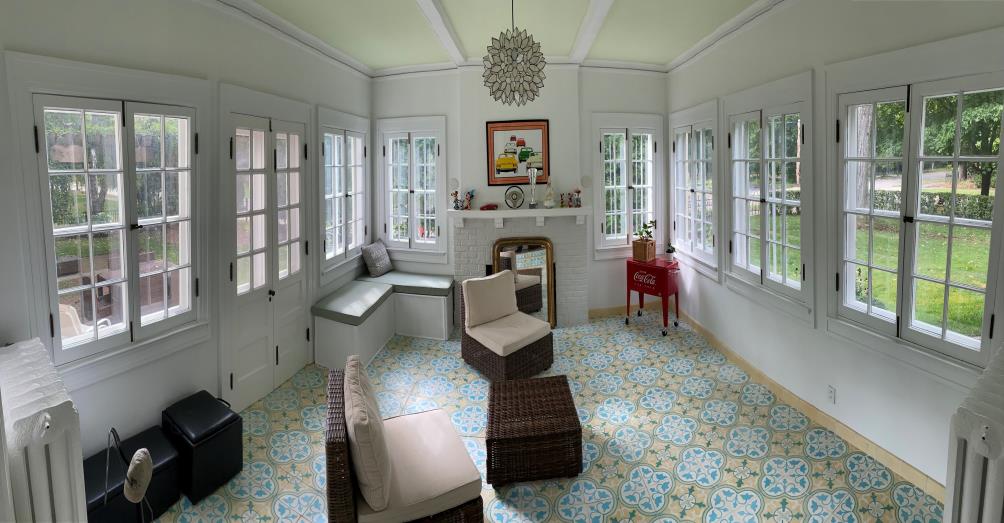
Contrasts the piano room with its simple Arts and Crafts box-beamed ceiling and brick-faced fireplace. Expansive fenestration with French doors leads to the south patio.
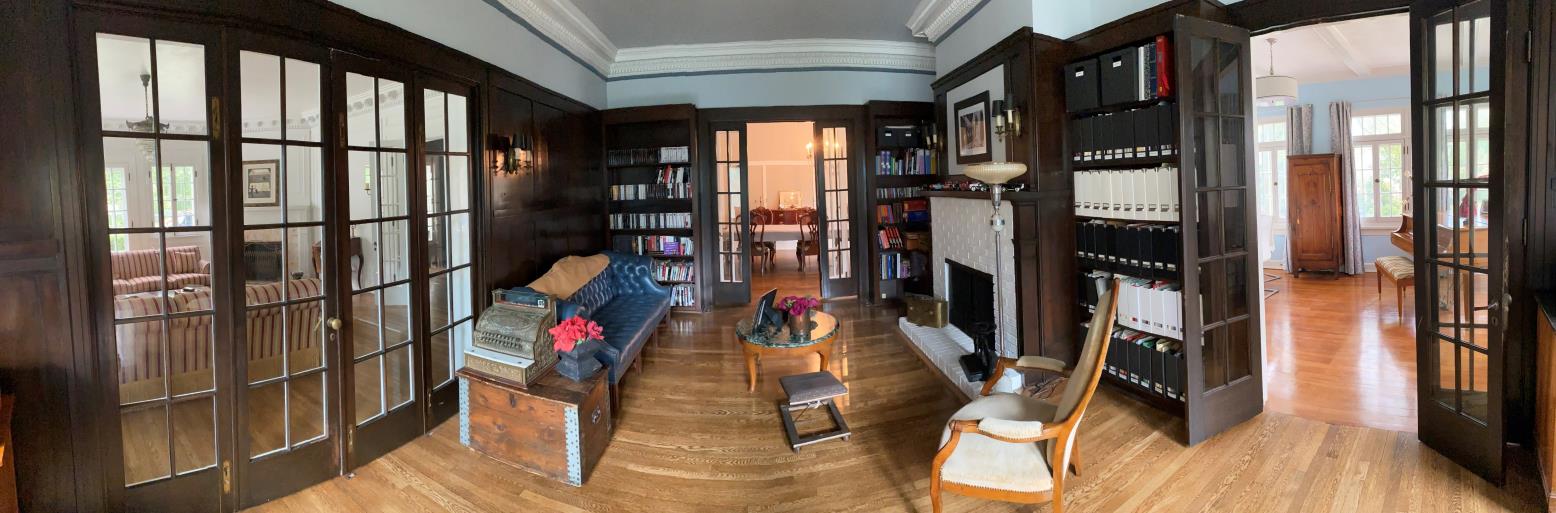
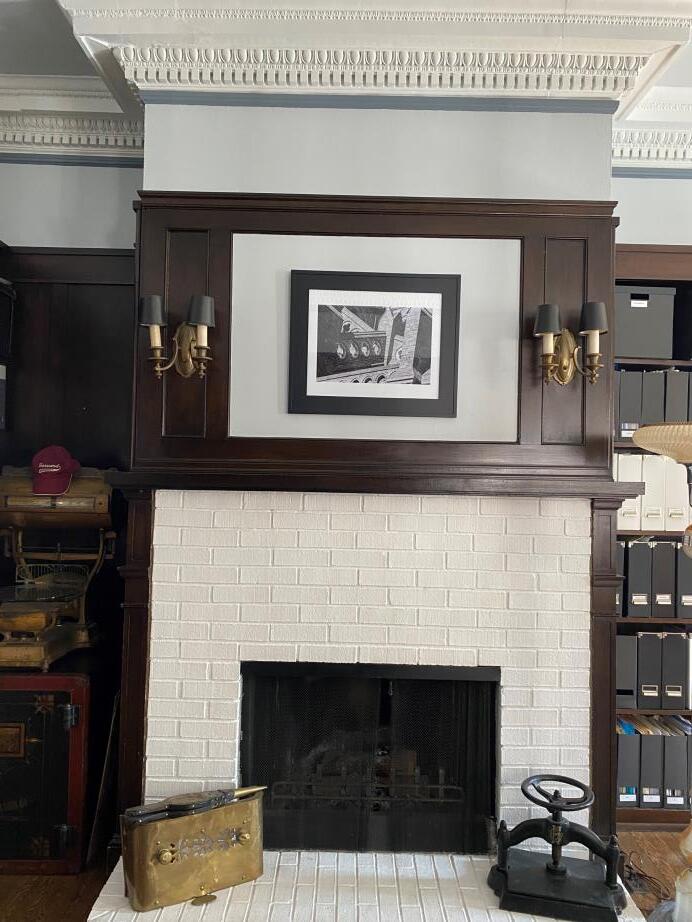
Features a combination of sophisticated egg-and-dart and dentiled cornice and leaded windows with simple brick-faced fireplace and built-in cabinets—the Arts and Crafts philosophy of combining craftsmanship with classical references.
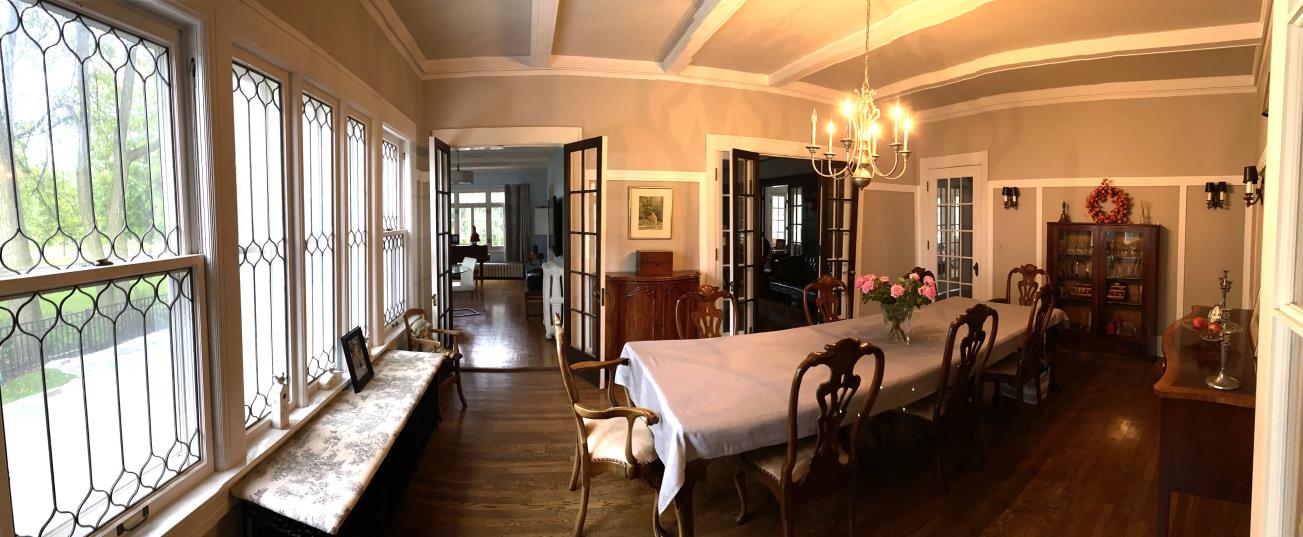
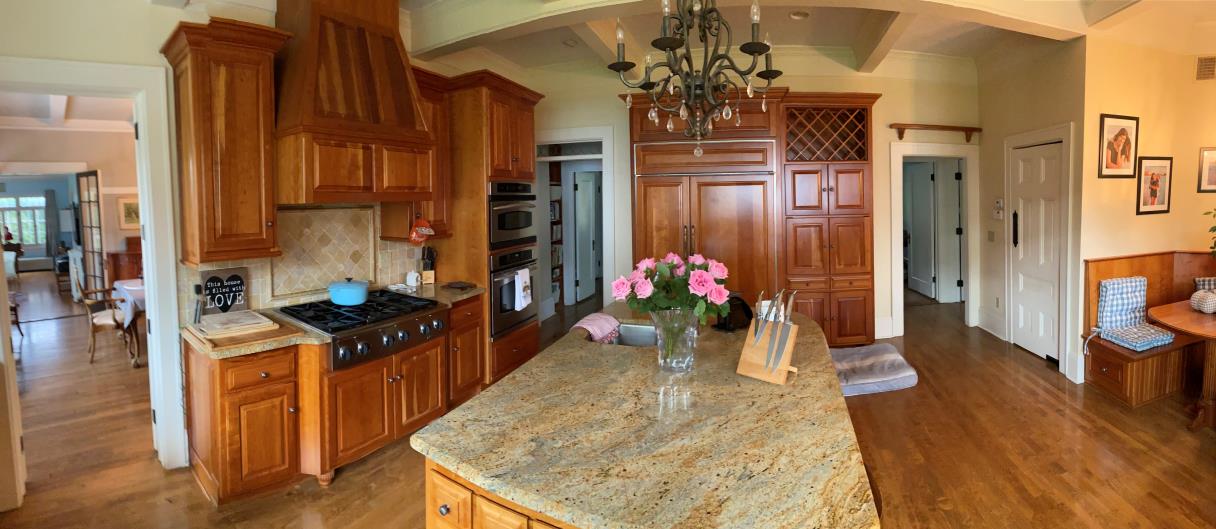
The dining room reveals an Arts and Crafts design with its batten-paneling walls in standard two-thirds height and box-beamed ceiling combined with classic leaded windows. The kitchen is the only room on the first floor that has been remodeled (in 2004), though the original leaded glass transom windows remain.
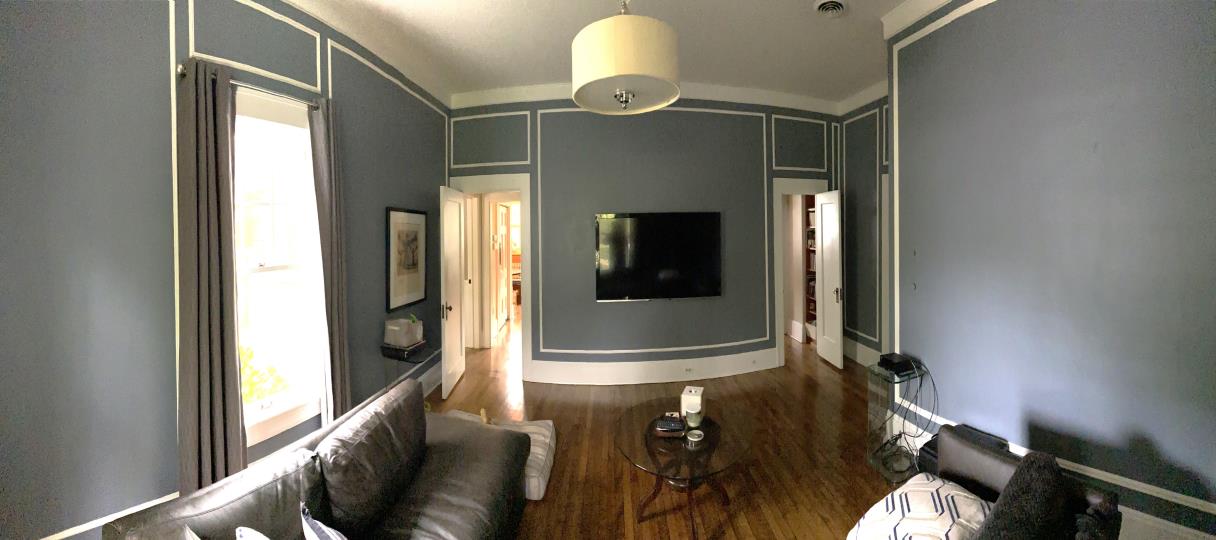
The private sitting room is innovative for its unusual direct access to both the kitchen (on the right) and the garage (on the left)—designed for Isabel's practical purposes to be close to her staff and to her automobiles. This was highly unusual for the era, when garages were typically connected to servants' areas rather than living spaces.
The interior of the garage is remarkable for being an original heated garage with direct connection to Isabel's sitting room, original built-in cabinets, and beadboard ceiling.
Interconnected bedrooms with innovative servants' quarters
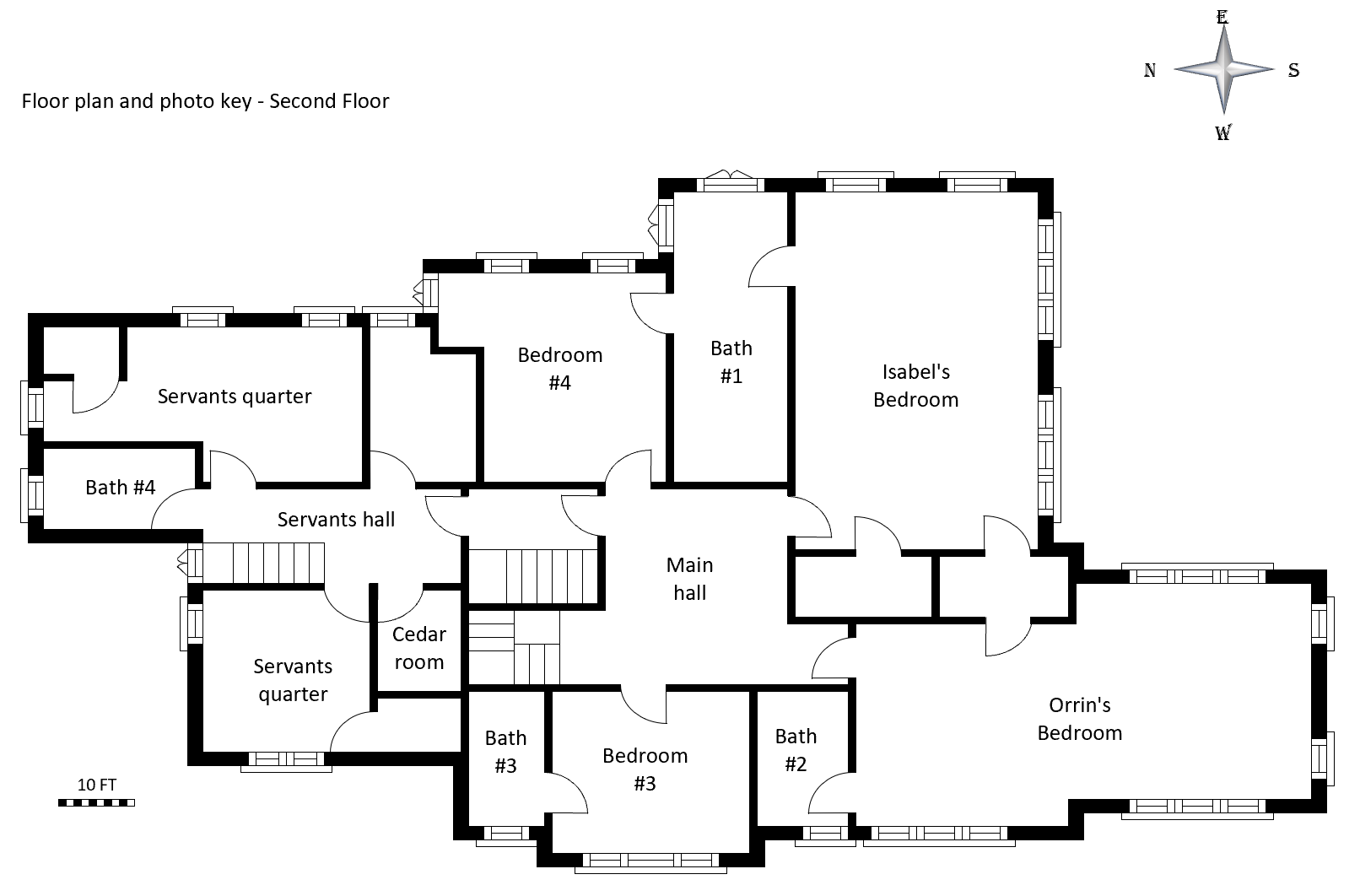
The second floor features the same Arts and Crafts characteristics as the first floor: interconnected bedrooms, massive fenestration, and period revival elements. It is also innovative for its spacious servants' quarters, which are located on the same floor as the owners' quarters (instead of the usual placement in the attic) and represent a third of the floor space.
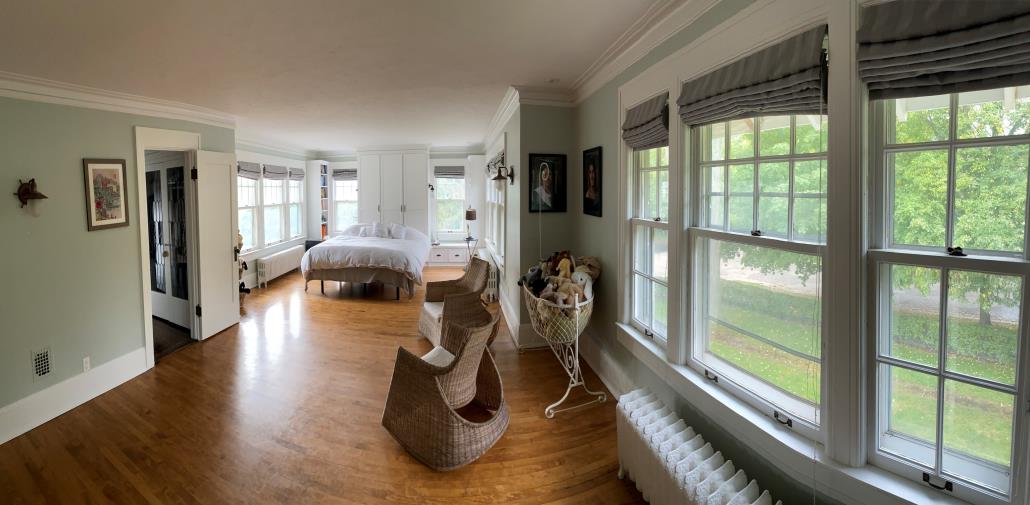
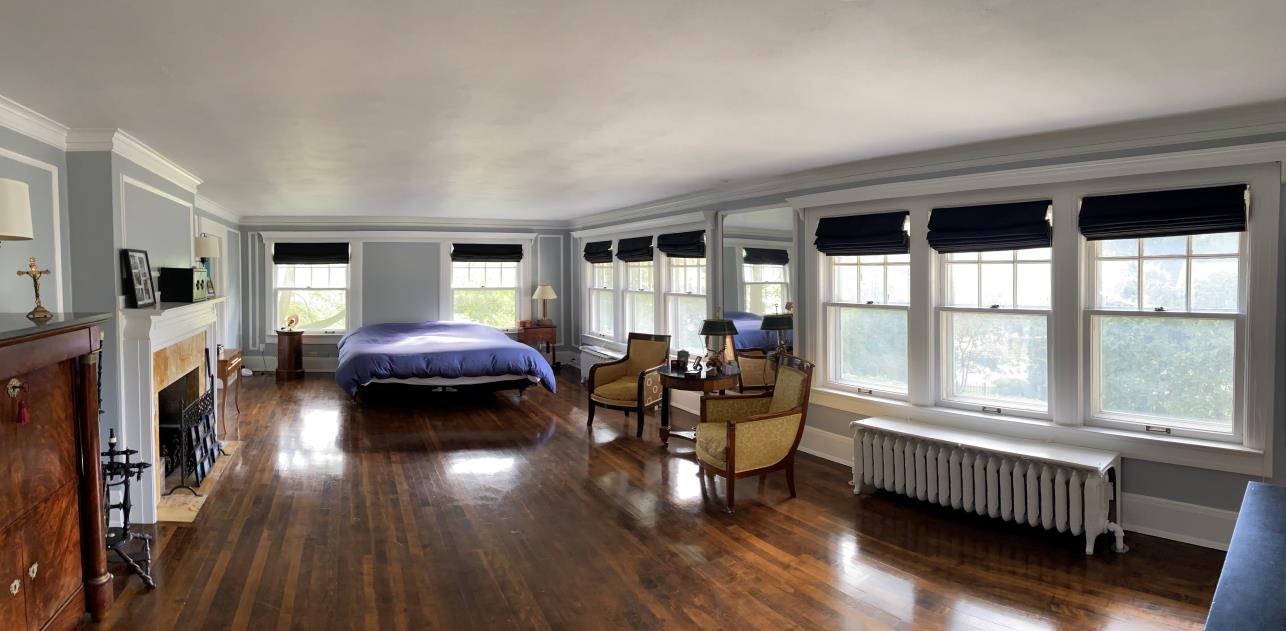
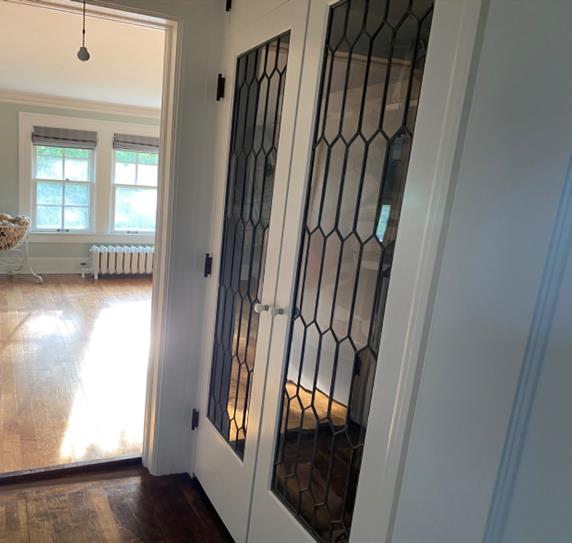
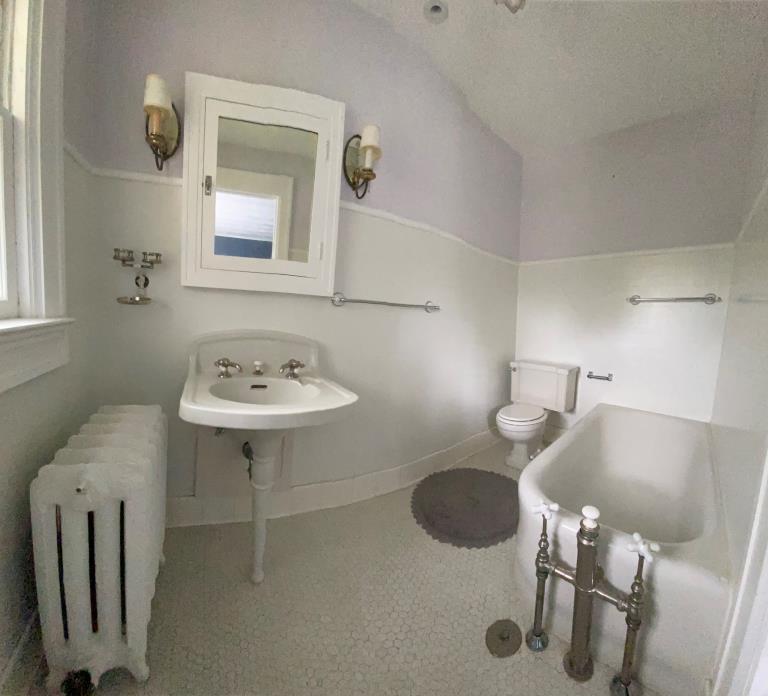
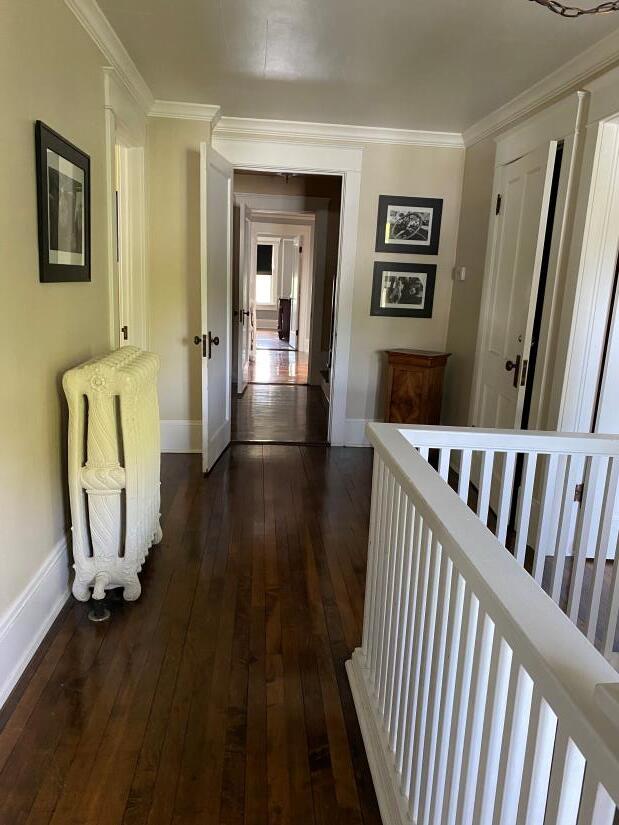
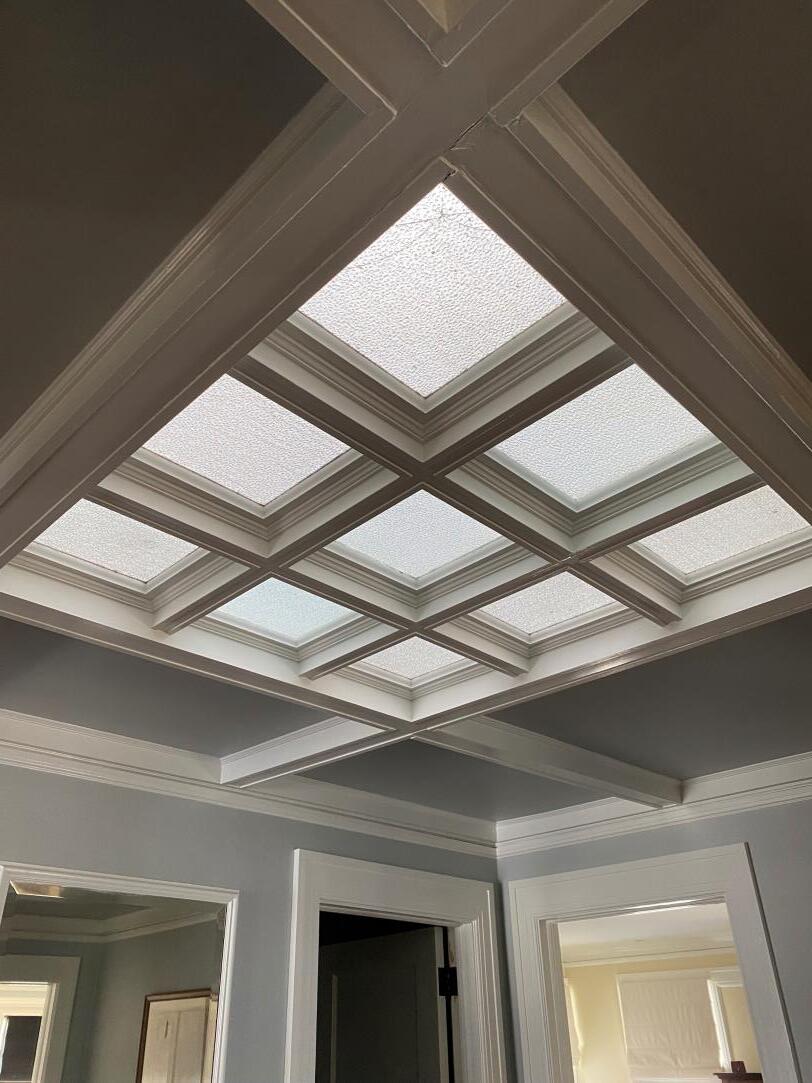
The owners' quarters feature a central hall with an interesting skylight, two guest bedrooms, and two master bedrooms interconnected by a leaded glass closet/dressing area. Isabel's bedroom on the east side features eight windows and a Georgian Revival fireplace. Orrin's master bedroom has expansive fenestration with nine windows. One bathroom remains completely original and is preserved as the "vintage" bathroom.
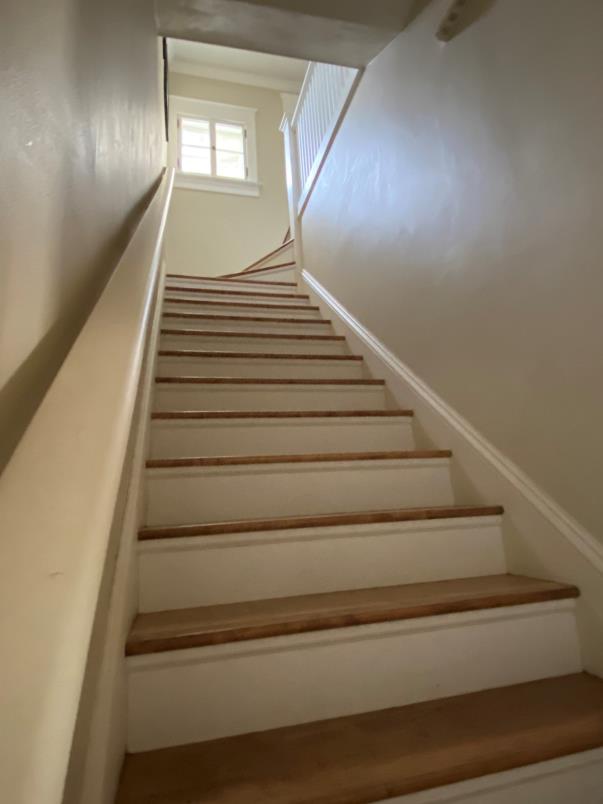
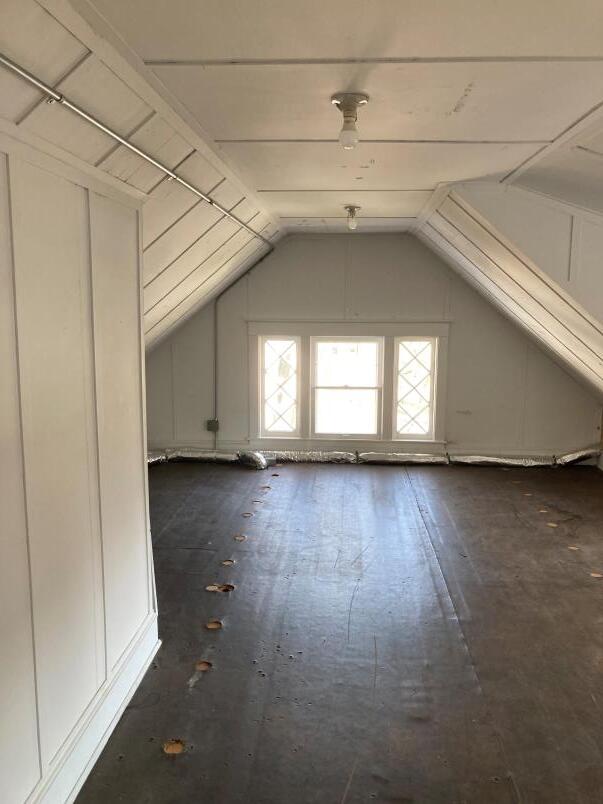
On the north side of the floor, the servants' quarters include two bedrooms, one bathroom, a cedar closet, and a linen closet. Two service stairs lead to the kitchen and the attic, and a back hall connects to the owners' quarters. The attic features direct access and the multi-paned skylight that illuminates the central hall below.
Original features preserved for over a century
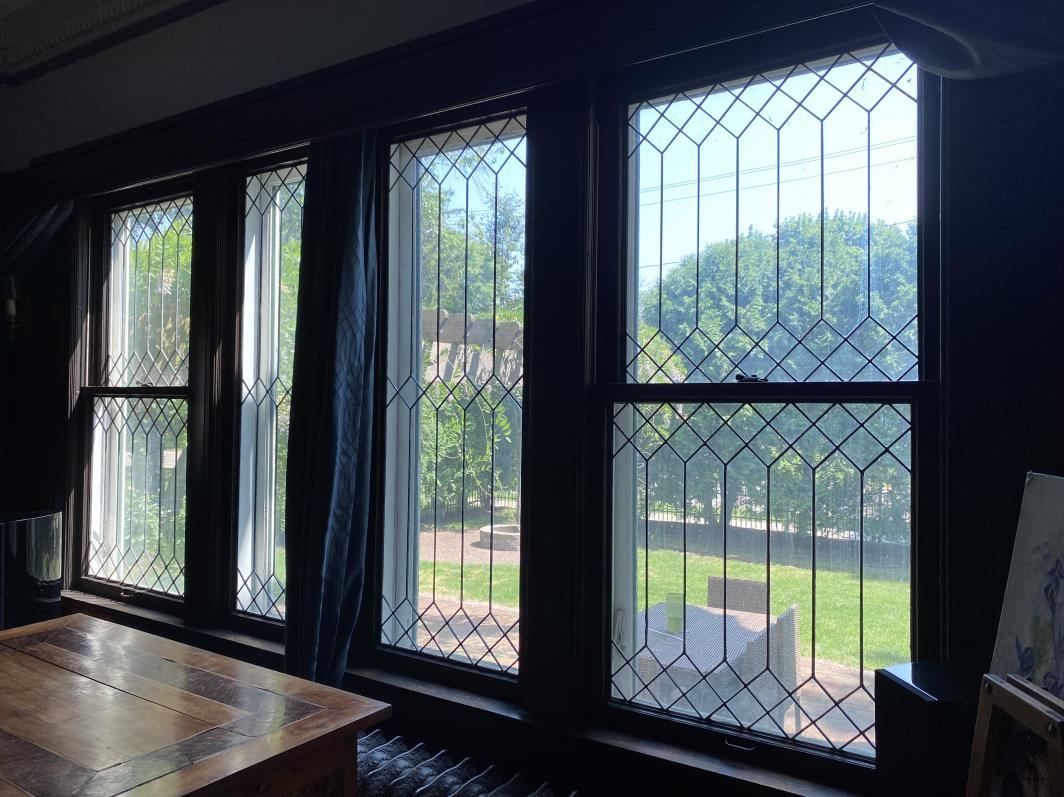
Extensive leaded glass windows throughout the dining room, library, and dressing areas showcase fine Arts and Crafts craftsmanship.
All four fireplaces remain intact: Georgian mantlepieces with onyx surrounds in the piano room and bedroom, Arts and Crafts brick-faced in the solarium and library.
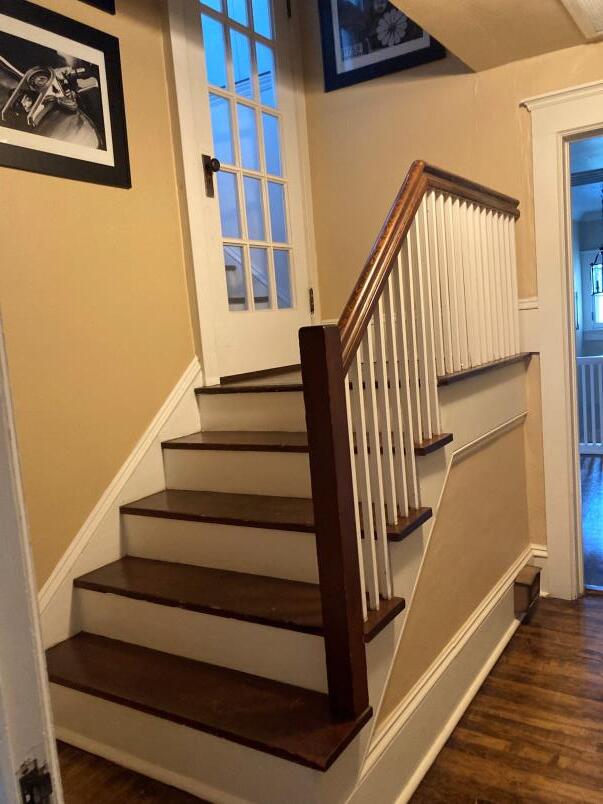
The elegant main staircase features classic Georgian Revival details with turned balusters and a graceful curve.
A multi-paned skylight with frosted glass illuminates the central hall from the attic level—an innovative feature for natural light.
The vestibule retains its original built-in closets with period hardware, demonstrating the Arts and Crafts emphasis on integrated design.
Sophisticated bracketed and dentiled cornices, egg-and-dart moldings, and box-beamed ceilings throughout demonstrate the period revival elegance.
Memories from Isabel's granddaughter Doris (1929–2018)
We were fortunate to find a book written by Isabel's granddaughter Doris Murray Kuhns, titled "Time Was: Some Memories from Eight Decades," which contains precious details about her grandmother "Nana's" house.
The 1937 photograph of the Christmas tree shows the piano room with its sophisticated bracketed and dentiled cornice and the panel look of the walls with muntins—details that remain virtually unchanged today.
This remarkable preservation allows us to directly compare the house as it appeared in family photographs from the 1930s with its current state, confirming the exceptional integrity of the Bacon-Johnson House.
Innovative Arts and Crafts open concept design
7 bi-fold French doors interconnect all main rooms
Expansive fenestration for natural light
First 3-car attached garage in Neenah
Sitting room connects to garage
Two master bedrooms interconnected
Spacious servants' area on 2nd floor
Explore the preserved beauty of the Bacon-Johnson House
The finest unaltered Arts and Crafts house in Neenah
Why the Bacon-Johnson House stands apart
Other examples of the Arts and Crafts style in Neenah are limited. The local architectural context for the Bacon-Johnson House is known to exist in only one other comparable high-style residential property: the Edward and Vina Beals House at 220 North Park Avenue, designed by A. C. Eschweiler of Milwaukee in 1911 and listed on the National Register in 2008.
Like the Bacon-Johnson House, the Beals House is low to the ground and displays Arts and Crafts features such as extensive stucco on the façade with extensive fenestration and minimal decorative elements. However, since its nomination, the Beals House has undergone significant alteration of its historic fabric.
The Bacon-Johnson House still features its original three-car attached, heated garage and all of its original wood windows. Inside, all four fireplaces remain intact and original.
Other Arts and Crafts examples identified in the Wisconsin Architecture and History Inventory are primarily middle-class variants that have undergone significant alterations:
The Veneta Thompson House (505 East Wisconsin Avenue) was moved to its present location from Pine Street in 1948 and has since undergone partial re-siding and two additions. The property's façade was significantly altered by the construction of a second story above a sun room with a gabled roof in place of a flat roof.
The Schneller House (115 Washington Avenue) has had its original window openings downsized with modern fenestration, and the original flat surface of the hipped roof has been surmounted by a vented addition with a gable roof.
The Pfeiffer-Kimberly House (616 East Forest Avenue) has undergone replacement and redesign of windows and the likely removal of a front porch.
In this context, and because of its interior and exterior integrity, the Bacon-Johnson House is a remarkable and unique example of an unaltered Arts and Crafts construction in Neenah.
On June 26, 2024, the Isabel and Orrin Bacon-Johnson House was officially listed on the National Register of Historic Places, recognizing its exceptional significance as a distinctively sophisticated and intact example of Arts and Crafts architecture.
The house retains a high degree of integrity on both the exterior and interior, exhibiting a stately simplicity combined with period revival references both inside and out that is characteristic of the Arts and Crafts period of construction.
The architectural significance is further enhanced by an Arts and Crafts open floor concept and by an inspired floorplan of public and functional rooms that reflect the taste, sophistication, and practicality of Isabel Johnson—the woman who directed both the construction of the house and the groundbreaking attached three-car garage.
As the finest unaltered Arts and Crafts house in Neenah with the first attached three-car garage, the Isabel and Orrin Bacon-Johnson House now stands among Wisconsin's most treasured historic properties.